
How Long Does It Take to Finish a Basement in Utah?
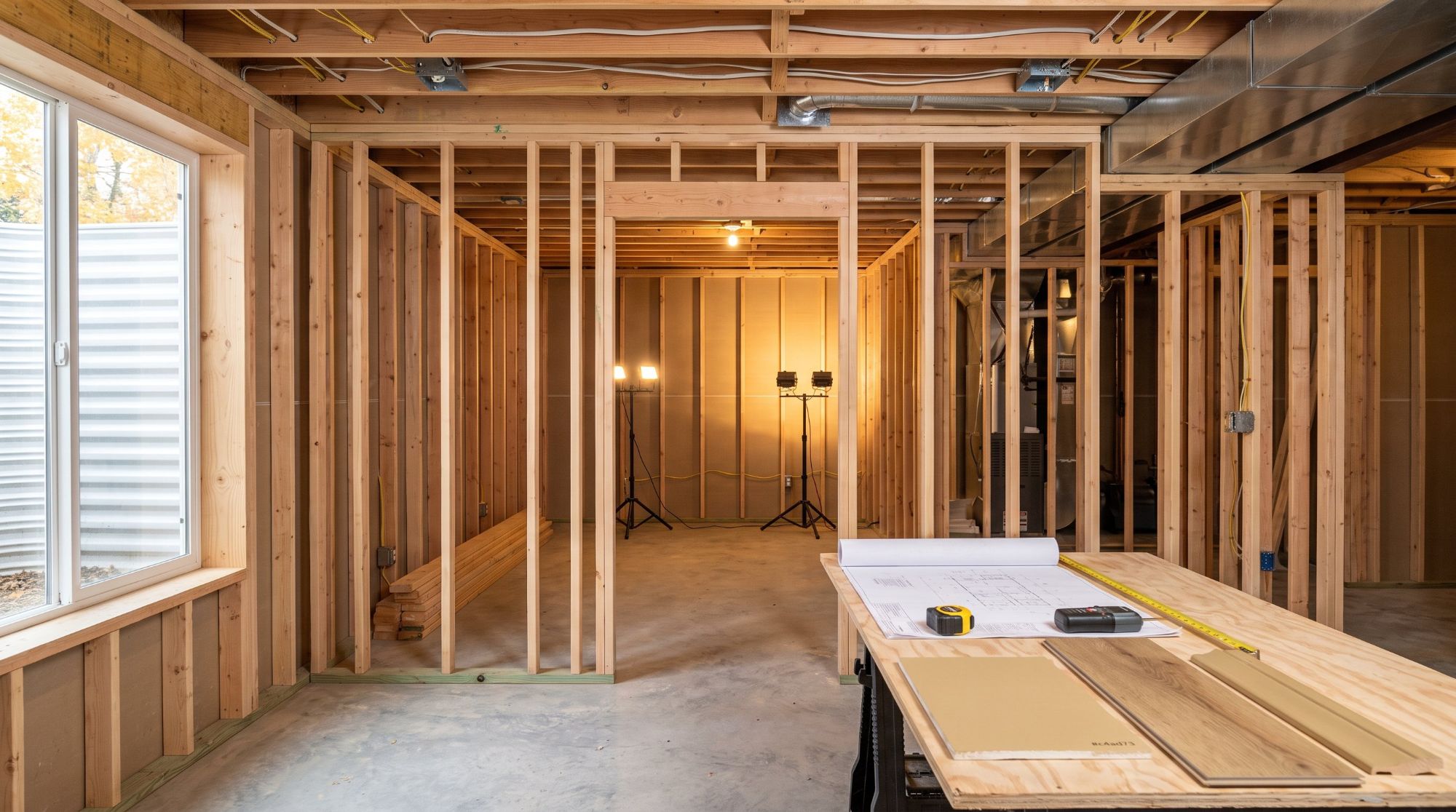
There is no single answer. A simple basement can be done in a couple of months. A larger one with a bathroom, a kitchen or a separate suite can take six months or more. Most fall somewhere in between, and the range is wide because the schedule depends on things that vary from house to house and city to city.
The honest way to plan is to understand the phases and what moves each one.
The phases
- Scope and design. Deciding what the space will be, measuring, drawing a layout, and choosing finishes. A bathroom or kitchen means plumbing decisions come first, because drain locations shape the floor plan.
- Permit. Finishing a basement in Utah needs a building permit from your city or county. Review time depends on the jurisdiction, how busy it is, and what you are adding. See the local steps for Lehi, Saratoga Springs, Herriman and South Jordan.
- Moisture, egress and prep. The slab and walls get checked before anything is built, and egress window openings are cut if a bedroom is planned. Our moisture guide explains the tests. If water turns up, fixing it comes first.
- Framing and rough-in. Framing, then plumbing, electrical and HVAC inside the walls and ceiling. The city inspects this stage before it is covered.
- Insulation, drywall and paint. Drywall is hung, taped, mudded and sanded in coats that need drying time between them.
- Flooring, cabinets, trim and fixtures. Long-lead items like custom cabinets, tile and special-order fixtures often set the pace here.
- Final inspection and punch list. The city signs off and any small fixes are finished.
Most of these phases cannot overlap. Each one has to be finished, and often inspected, before the next can start. That is why a job rarely moves faster than its slowest step.
What makes one basement take longer than another
- Bathrooms and kitchens. More trades, more inspections and more special-order materials.
- Moisture or slab problems found late. The schedule stops until they are fixed.
- Moving plumbing or ductwork. Relocating a drain can mean cutting and patching the slab.
- Egress windows. Digging a window well and cutting concrete adds work before framing starts.
- Changes after work begins. Changing the layout after framing usually means redoing rough-in and re-inspecting.
- Late finish selections. Waiting on tile, cabinets or fixtures that were not chosen or ordered in time.
- Inspections. A failed inspection means a correction and a re-inspection, and inspector availability varies.
- Season and availability. Winter slows exterior work like window wells, and good contractors book out ahead.
What you can do to keep it moving
- Settle the layout and finishes before work starts, and order long-lead items early.
- Get the moisture test done first.
- Ask for the permit to be submitted as soon as plans are final.
- Keep changes after framing to a minimum.
Questions to ask a contractor about timing
- When can you actually start, and when will the permit be submitted?
- Which items in my plan are long-lead, and when should I order them?
- What happens to the schedule if an inspection fails or we find moisture?
- Will I get a written schedule with milestones? Our contractor guide covers what else to get in writing.
Treat any estimate as a plan, not a promise. If you need the basement ready by a certain date, such as a family member moving in, work backward from that date and leave room for permits and inspections.
For the full sequence of work, see steps to finish a basement. For what drives the price, see basement finishing cost in Utah.
Planning a basement in Utah? Book a free estimate and we'll look at your space and talk through what the schedule depends on.