
Can Your Lot Handle a Walkout Basement? Groundwater, Slope and Soil in Utah
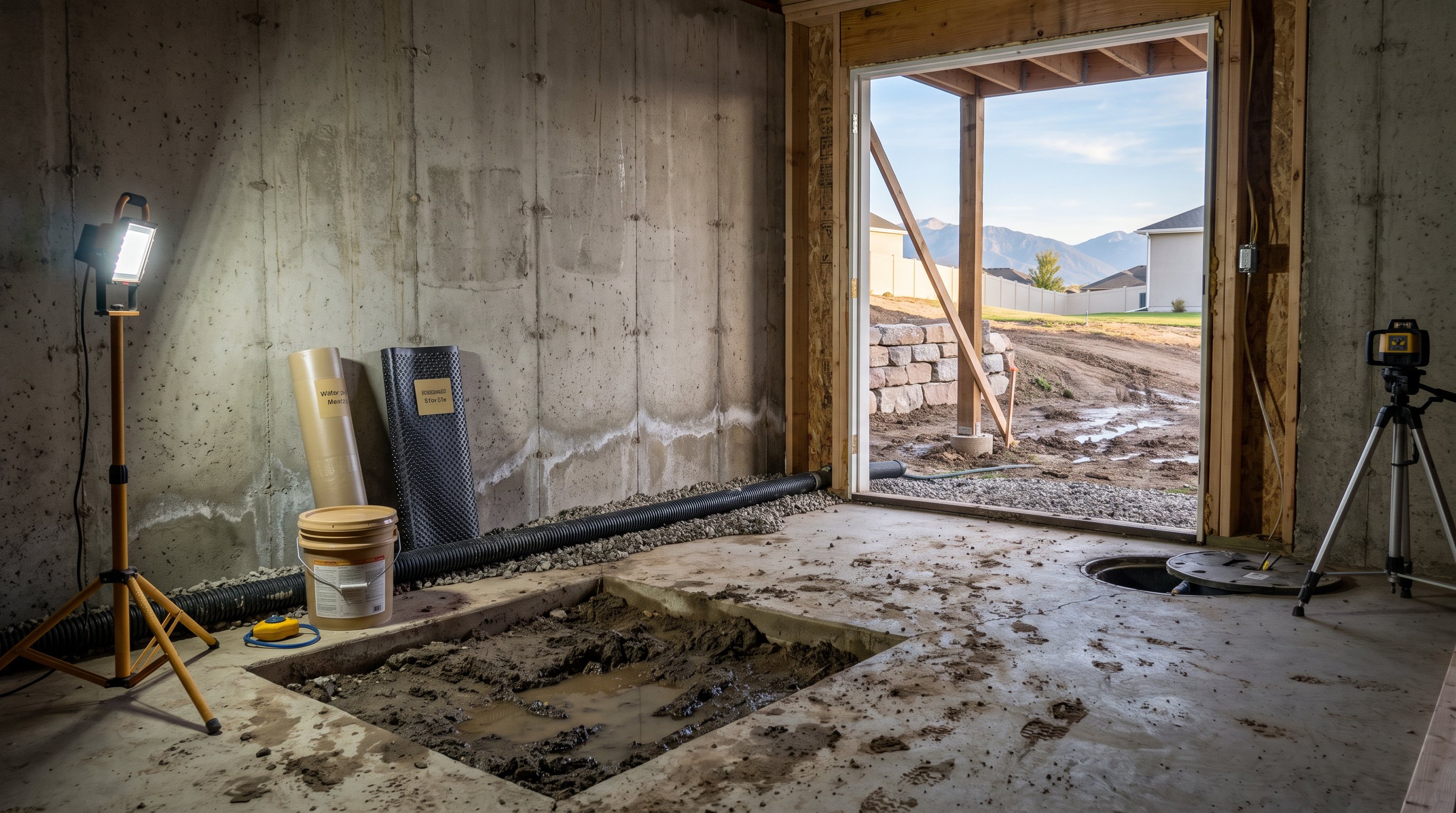
A walkout basement depends on more than a sloped lot. Whether one works, and what it takes to keep it dry, comes down to what the water is doing under the ground. A lot that looks perfect from the street can hide high groundwater or soil that holds water, and that changes the design, the drainage and the budget before any finishes are chosen.
The honest order is to find out what the site can support first, then design the walkout around it.
Why groundwater matters more for a walkout
A walkout opens one side of the basement to grade. The walls that stay below ground still hold back soil, and when that soil stays wet, water pushes against the walls and slab. That pressure is what drives seepage through cracks, joints and pipe openings.
Groundwater moves through soil based on how permeable it is and how the land slopes, as the U.S. Geological Survey explains. On a hillside lot, water from higher ground can run toward the house, and the walkout side becomes the low point it drains to unless grading and drains are designed for it.
What decides whether a lot can support one
Slope and which way the water runs
A walkout needs the ground to fall away from the house. But slope alone is not enough. If the uphill side sends water toward the foundation, a walkout can add risk unless the grading and the drain system are planned together.
Soil and how fast it drains
Clay-heavy soils, common in parts of Utah County and the Salt Lake Valley, drain slowly and can swell when wet. Soil that holds water after rain or irrigation adds pressure on the walls and can move enough to crack finishes later. A soils report tells the engineer what the foundation and drainage need to handle.
How deep the groundwater sits
If groundwater is near the planned footing or slab depth, the design needs more: drain board, washed gravel, footing drains, a sump plan and a safe place to send the water. In some cases the answer is a partial walkout or a different footprint.
Irrigation and the seasons
Spring snowmelt, summer watering and fall storms each change how wet the soil is, so a lot that looks dry in July can tell a different story in March. Lawn irrigation close to the foundation, downspouts that empty next to the house, and planter beds that trap water all keep the soil wet. Newer subdivisions with large lawns, including many in Saratoga Springs, Eagle Mountain and Lehi, are worth a closer look.
Warning signs a lot may be difficult
On the lot:
- Ground that stays muddy long after the rest of the area dries
- Water-loving plants, salt staining or erosion channels
- Neighboring homes running sump pumps often
- Retaining walls that lean or bow, or fences tipping downhill
- Window wells collecting silt or standing water
In an existing basement:
- A musty smell, white mineral deposits (efflorescence) on concrete, or peeling paint near the floor
- Water stains in a corner, especially under a porch or cold storage room
- Carpet or flooring that has been replaced more than once
None of these rules a walkout out on its own, but each is a reason to investigate before designing one.
What to check before anyone digs
- Survey the grade. Shots of the existing grade and the neighboring elevations show where water will go.
- Test the soil and groundwater. Test pits or a geotechnical report confirm what is below the surface instead of guessing.
- Plan the drainage with the design. Footing drains, waterproofing, grading and where discharge goes should be decided together, not added later.
- Know how the space will be used. A bedroom needs a code-compliant egress opening, and a suite or bathroom adds plumbing and moisture demands. Plan those around a dry envelope.
- Keep the alternatives open. A full walkout, a partial walkout, or a different footprint can all be right depending on what the site shows.
Spending a little on testing up front is far cheaper than a change once excavation has started.
Next steps
For what the build itself involves and what drives the price, see walkout basement cost in Utah. For testing an existing basement before finishing it, see basement moisture before finishing. Building in Saratoga Springs? See basement finishing in Saratoga Springs for the city's own steps.
Thinking about a walkout? Contact us and we'll look at the lot and talk through what it would take.