
Salt Lake City Residential Remodeling Cost And Planning Guide: What Utah Homeowners Should Budget In 2026
Salt Lake City remodeling costs can look straightforward on paper, until a wall opens up, a sewer line sits in the wrong place, or an old Sugar House basement shows the kind of settling we see all along the Wasatch Front. We've walked enough homes to know that budgets are won or lost before demolition starts. In this guide, we'll break down what Utah homeowners should realistically expect to spend in 2026, where the biggest pricing swings come from, and how to plan a project that adds function, comfort, and long-term value without nasty surprises halfway through.
What Drives Remodeling Costs In Salt Lake City
The short answer: labor, scope, and hidden conditions drive most of the bill in Salt Lake City.
In real walk-throughs, the biggest surprise usually isn't paint or tile, it's what's behind the drywall. In older homes near the Avenues, Millcreek, and parts of Sugar House, we often find outdated wiring, undersized plumbing, or foundation hairline cracks that need attention before finishes go in. Along the Wasatch Front, soil movement and moisture are real budget factors, so we inspect for settling and water issues before we hang a single sheet of drywall.
Labor has also stayed firm. According to the U.S. Bureau of Labor Statistics, construction wages have continued rising nationally, and that shows up locally in framing, electrical, and finish carpentry pricing. Material choices matter too, but labor-intensive work moves numbers fastest.
For broad updates across 1,000 to 1,600 square feet, flooring, drywall repair, paint, trim, we commonly see costs around $30 to $37 per square foot. Smaller, more intensive remodels, especially kitchens and baths, usually land around $95 to $160+ per square foot because every square foot carries more plumbing, electrical, and fixture cost.
For homeowners comparing remodel paths, our home remodeling services and recent Utah basement ROI guide show why design choices and existing conditions matter just as much as size.
Typical Price Ranges For Popular Home Remodeling Projects
Here's the practical budgeting answer: basement projects are usually the best value per square foot, while kitchens and bathrooms cost more because they're systems-heavy.
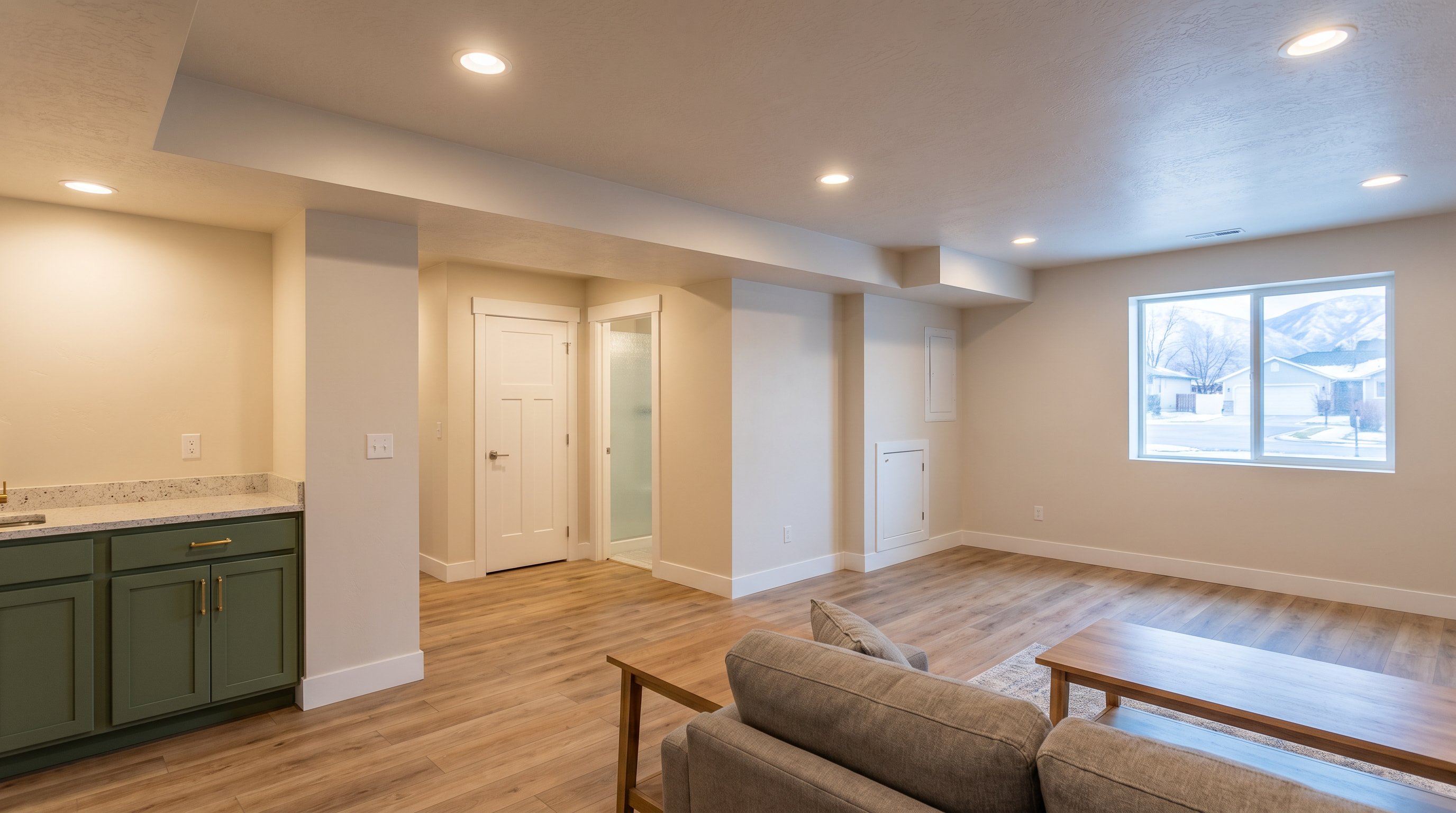
From our recent 2024–2026 estimating data, basement finishing under 1,000 square feet typically runs $52 to $73 per square foot. Larger basements, 1,000 to 1,600 square feet, usually drop to $45 to $56 per square foot because framing, mobilization, and mechanical work scale more efficiently. A full basement with a bedroom, bath, family room, and storage can be far more cost-effective than a compact but plumbing-heavy main-floor remodel.
That's one reason many families add space downstairs first. We've priced entertainment basements with theaters, wet bars, and playrooms that came in lower than a mid-range kitchen gut. Our basement finishing work and this step-by-step Utah basement guide give a clearer picture of how those numbers stack up.
A few 2026-style upgrades that raise cost, but often raise enjoyment and resale too, include:
- golf simulator bays with added ceiling height
- infrared saunas or steam showers
- custom wet bars with painted cabinetry and brass hardware
- Murphy Door hidden rooms
- ADU-style kitchenettes and laundry areas
As a rule, every added plumbing fixture, custom cabinet run, or structural change moves the budget faster than cosmetic finishes alone.
How Project Scope, Materials, And Layout Changes Affect Your Budget
One removed wall can change the whole math.
We've seen a homeowner start with "just update the basement" and, within 20 minutes, realize they also want a bathroom moved, a separate ADU entrance, and a kitchenette for rental income. That shift can add tens of thousands because layout changes trigger plumbing relocations, electrical redesign, permits, and often HVAC revisions.
Materials matter, but not always how people expect. Swapping carpet for premium LVP might add a few dollars per square foot: relocating a drain stack can add far more. In Utah's dry climate and snowy winters, we usually recommend LVP or engineered hardwood for basements because they handle temperature swings better than solid wood and resist moisture better than many laminates.
Scope also affects price efficiency. A focused whole-floor refresh often lands in that $30 to $37 per square foot range, while a smaller high-detail remodel can exceed $100 per square foot quickly. And egress windows matter: if a basement room will be labeled a bedroom, Utah code requires compliant egress, which means concrete cutting, window installation, and well work.
We've found homeowners get the best results when they separate must-haves from nice-to-haves early. Our basement remodeling team often prices alternates side by side so clients can choose where custom upgrades actually pay off.
Planning For Permits, Timelines, And City Requirements
The surprise for many owners is this: permits rarely make the project expensive, but they absolutely shape the timeline.
In Salt Lake City, permit review, trade inspections, and correction cycles can add real calendar time even when construction itself is straightforward. For a standard basement finish, we typically see 8 to 14 weeks from framing to final paint, depending on city review speed, inspection scheduling, and whether the project includes kitchens, added bathrooms, or structural changes.
We handle permitting so electrical panels, plumbing lines, and framing details are fully up to code and ready for inspection. That matters even more if you're building a mother-in-law apartment or adding a legal bedroom. The International Residential Code and local building departments require specific clearances, life-safety details, and egress standards. For Utah homeowners, Salt Lake City Community and Neighborhoods is the key local source for current permit rules.
Local conditions shape planning too. In neighborhoods from Holladay to downtown Salt Lake City, older homes can hide low duct runs, shallow utility trenches, or concrete that's tougher to cut than expected. We plan around that with field measurements, up-front scope reviews, and 3D design mockups so the permit set matches what we'll actually build.
How To Build A Realistic Remodeling Budget Without Surprises
The cleanest budgets include a base cost, a contingency, and a separate wish-list bucket.
When we build estimates, we don't just total materials and labor. We break out fixed scope, likely allowances, and risk items. For most residential remodels, a 10% to 15% contingency is the minimum practical cushion. If the home is older, has a history of settling, or includes major plumbing relocation, we lean closer to 15% to 20%.
A realistic budget usually includes:
- construction cost
- design and drafting
- permit fees
- finish allowances for tile, flooring, and fixtures
- contingency reserve
- temporary living or storage costs if needed
The biggest budgeting mistake we see is choosing finishes before confirming infrastructure. A homeowner may spend hours comparing tile samples, then discover the panel needs upgrading or a bathroom drain has to move 12 feet. That's why we provide free in-home estimates and transparent 3D mockups first.
For larger planning comparisons, our remodeling process and finished basement options help homeowners map scope before they commit. Weekly updates and daily cleanup also reduce the soft costs people forget to price, stress, downtime, and change orders caused by poor communication.
Choosing The Right Remodeling Approach For Long-Term Value
The highest-value remodel isn't always the fanciest one. It's the one that fits how you'll live in the house for the next 5 to 10 years.
For growing families, that often means finishing a basement with a bedroom, bath, storage, and flexible rec space. For aging parents or rental income, an ADU-style layout with a separate entrance, kitchenette, and laundry usually delivers more practical value than cosmetic-only updates. According to Remodeling Magazine's Cost vs. Value report, projects that improve usable living space and functionality tend to hold value better than ultra-niche luxury features, though the right luxury feature can still be worth it if you'll use it every week.
We've tested that logic in real planning meetings. A golf simulator sounds extravagant until a homeowner in Draper realizes they'll use it 4 nights a week all winter. A cold storage room sounds plain until custom shelving turns a concrete cave into serious household storage, or a climate-controlled wine room.
Long-term value usually comes from:
- durable materials over trendy cheap finishes
- layouts that support resale flexibility
- code-compliant bedrooms and baths
- moisture-smart basement design
- contractors who communicate clearly and build cleanly
That's the approach we use at Panden: functional design, durable construction, and service that solves problems before they turn expensive.
Conclusion
A solid remodeling plan in 2026 starts with honest numbers, local code knowledge, and a clear scope before demolition begins. In Salt Lake City and across northern Utah, the best budgets account for permits, hidden conditions, and how the space will serve your family long term. When those pieces are handled up front, remodeling gets a lot less stressful, and a lot more rewarding.