
Basement Finishing Cost in Utah: What Drives the Price
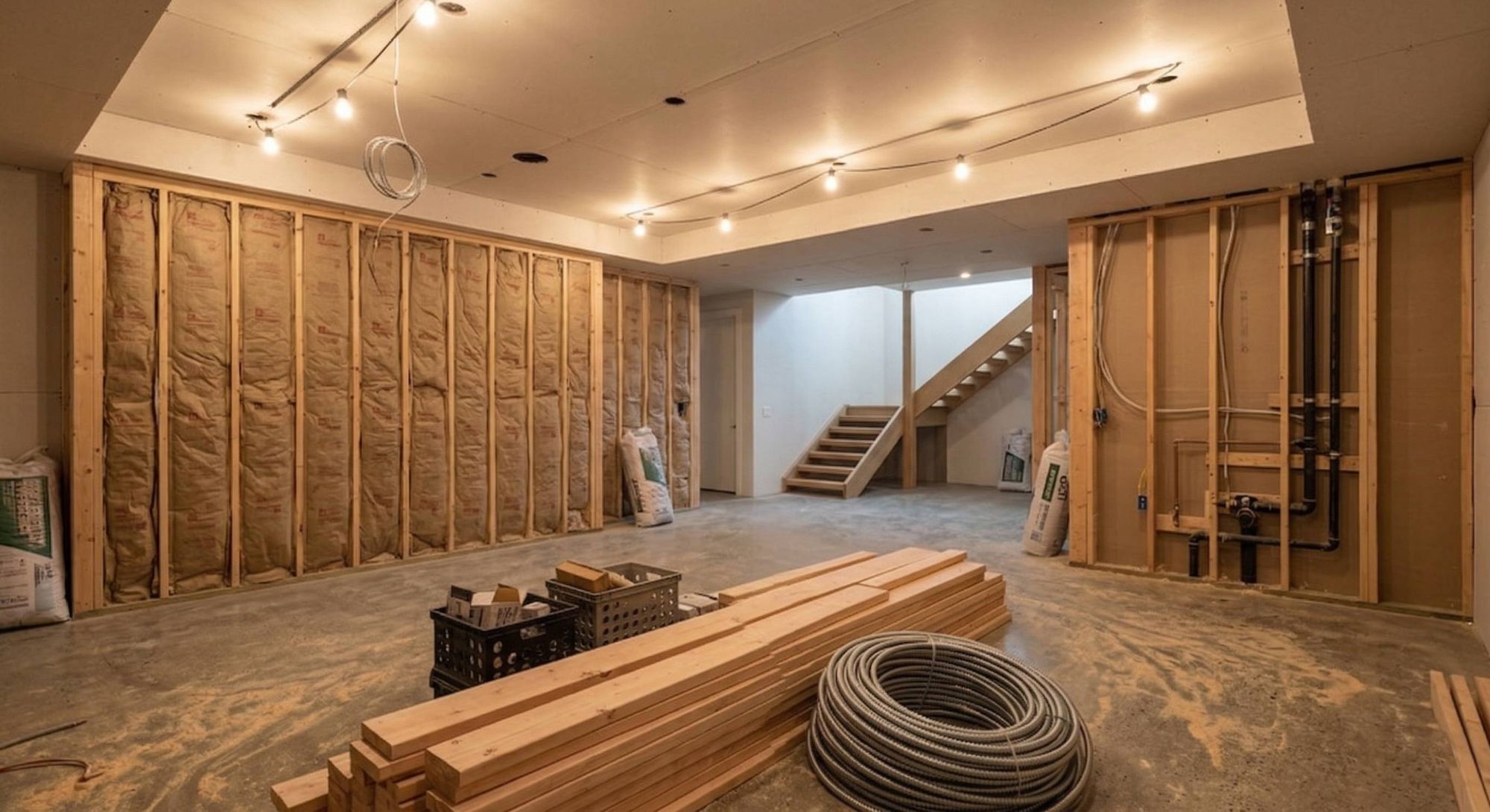
No single price fits every Utah basement. Two basements of the same size can come in far apart, because the cost depends on what's inside the walls and what you want the space to do: whether there's a bathroom, whether a bedroom needs a new window, how the ducts run, how dry the slab is. PANDEN bids from a walkthrough, not a price per square foot, and this guide explains why, what moves the number most, and how to read a bid so you can compare it fairly.
Why a price per square foot misleads
A per-square-foot number hides the fixed pieces of a project. A bathroom, an egress window and well, a panel upgrade and the permit cost about the same in a 600-square-foot basement as in a 1,200-square-foot one. Spread over a small space, they make each square foot look expensive. Spread over a big one, they look cheap. A square-foot figure from another house, another city or another year can't tell you what yours will cost.
What moves the cost most
1. What the space is for. A family room, a bedroom, a rental apartment and a mother-in-law suite are different projects. Each adds rules, rooms and fixtures. See basement finishing ideas in Utah.
2. A bathroom. Often the single biggest item. It's much cheaper where the house was roughed in for one. If not, the slab has to be cut for new drains, and a drain below the home's sewer line can need a pump.
3. Egress. Every basement bedroom needs an escape window or door: at least 5.7 square feet of clear opening, with a window well of at least 9 square feet below grade (2021 IRC R310). If the basement has no qualifying window, a new opening has to be cut into the foundation and a well installed.
4. Ceiling height, ducts and soffits. The 2021 IRC requires 7 feet for living space, with ducts and beams allowed down to 6 feet 4 inches (R305). Boxing in ducts, rerouting them or choosing a different ceiling type changes the work. See basement ceiling options in Utah.
5. Moisture and radon. Testing is cheap and what it finds isn't. Drainage, grading, window wells, a sump or a mitigation system all have to come before finishes. See basement moisture before finishing.
6. A kitchen, kitchenette or wet bar. Adds plumbing, venting, cabinets and counters, and may change how your city classifies the space. See mother-in-law suites in Utah.
7. Electrical and heating and cooling. Finishing adds circuits, lighting and load. The panel may need an upgrade, and the existing furnace and ductwork may not be able to heat and cool the new space.
8. Structural items. Posts, beams and walls that are in the way can't be moved casually. A change may need an engineered solution.
9. Flooring and slab preparation. Material is one part. Testing, leveling and any subfloor or vapor-control layer are another. See basement flooring options in Utah.
10. Finish level. Cabinets, counters, tile, trim, doors, lighting and fixtures swing the total more than almost anything else once the structure is set.
11. Sound control. Insulation in the joist bays, solid-core doors and a drywall ceiling add cost, and matter for a theater, an office or a bedroom under a busy kitchen.
12. Size and layout. More square feet cost more, but a simple open plan costs less per room than many small rooms with doors, closets and corners.
13. Permits, plans and inspections. Fees and review steps vary by city. See the local steps for Lehi, Saratoga Springs, Herriman and South Jordan.
14. What's hidden. A crack, a wet wall, old wiring or a missing vent can show up once the walls are open. A good bid says how that will be handled.
What a good bid looks like
An itemized bid breaks the job into the same parts you've just read, so you can see where the money goes and decide what to keep, change or save for later. Look for:
- Scope by room and by trade. Framing, electrical, plumbing, heating and cooling, insulation, drywall, flooring, trim, paint.
- Allowances. Flooring, cabinets, lighting and fixtures are often priced as allowances. Know the amount, and what happens if you choose something that costs more.
- Exclusions. What the bid leaves out matters as much as what it includes.
- Permits and inspections. Who pulls them and who pays.
- A moisture and radon plan. Whether testing is included and how a problem would be handled.
- How changes are priced. Written change orders, approved before the work.
- A payment schedule tied to stages of the work.
For the full checklist, see how to choose a basement contractor. A big gap between two bids usually means one of them leaves something out.
Ways to keep the cost under control
- Decide the use first. Changes after framing are expensive.
- Test for moisture and radon before you price finishes. A surprise afterward costs more.
- Rough in now what you may want later. A wet bar, a second bathroom or a laundry is far cheaper to rough in while the walls and slab are open than to add later.
- Keep the plan simple. Open plans, fewer walls and standard sizes cost less than custom shapes.
- Spend on what you can't change easily. Structure, moisture control, insulation and rough-ins are hard to fix later. Finishes are easier to upgrade.
- Plan the order of the work. See how to finish a basement.
Is it worth it?
Finishing a basement adds living space without adding a footprint, and what you get depends on how you use it. A bedroom and bath can make the space work for a guest, a family member or a renter. A family room gets used every day. Value to you, and to a buyer someday, depends on whether the space is dry, code-compliant and well built, which is why the unseen parts matter. If rental income is part of the plan, see our guide to ADU zoning and permits for what your city allows.
How PANDEN prices a basement
Every project starts with a free in-home estimate. We look at the space, the windows, the ductwork, the plumbing rough-ins and the electrical panel, talk through what you want, and prepare 3D design mockups so you can see the plan before we break ground. You get an itemized bid, often within 24 to 48 hours. We prepare the plans, submit the permit and schedule the inspections.
Frequently asked questions
How much does it cost to finish a basement in Utah?
It depends on the size, what the space is for, and what's already there: a bathroom, egress, ducts, moisture and finishes. That's why PANDEN bids from a walkthrough instead of quoting a number up front.
Why does the cost per square foot vary so much?
Fixed items like a bathroom, a window well and a permit cost about the same in a small basement as a large one, so they weigh more per square foot in a small space.
What's the biggest cost in a basement finish?
Usually a bathroom, egress work or a kitchen, plus the finish level. It depends on the plan.
Does a basement bathroom cost more than the rest of the work?
Often it's one of the larger single items, especially if the basement wasn't roughed in for plumbing.
Do I need a permit?
Yes. Framing, electrical and plumbing work all need permits, and adding a bedroom, bath or kitchen brings more requirements. See the guide on how to finish a basement.
How do I compare two bids?
Line them up on the same items: egress, ceiling, moisture, plumbing, electrical, heating and cooling, flooring, permits and allowances. See how to choose a basement contractor.
Can I save money by doing part of it myself?
Some homeowners handle painting or cleanup. Work that needs a permit, such as electrical, plumbing and framing, has rules, so ask your city and your contractor first.
Sources: 2021 International Residential Code, R305 (ceiling height) and R310 (emergency escape and rescue openings), as adopted in Utah; Utah Radon Program.