
South Jordan ADU Construction Guide For Rental Income: How To Build A Profitable, Code-Compliant Unit In 2026
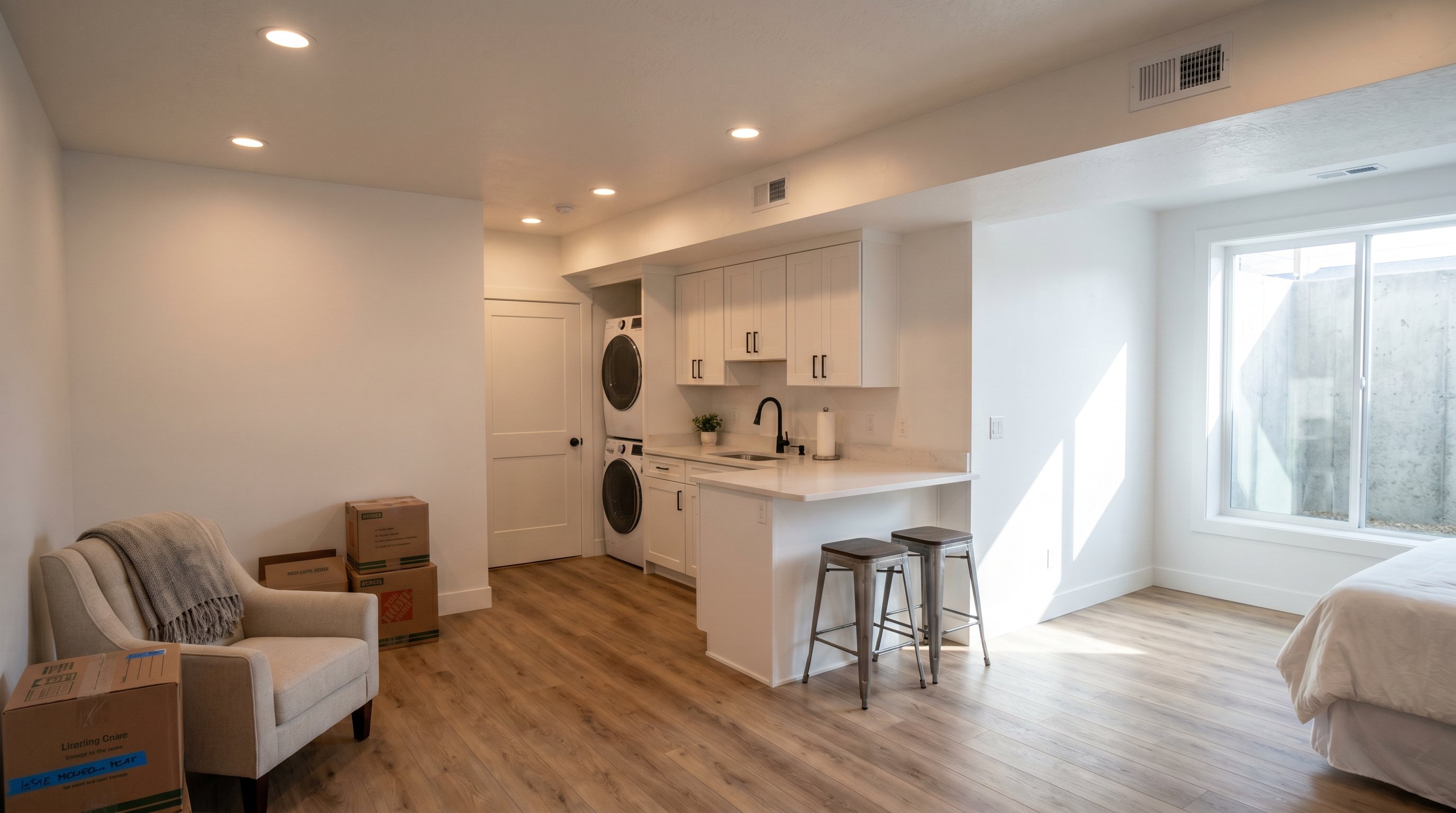
South Jordan ADU construction is no longer a niche project for a few oversized lots. In 2026, it's one of the clearest ways Utah homeowners can create rental income, add flexible family housing, and increase long-term property value without buying another home. We've walked basements with hairline foundation cracks, measured ceiling heights twice, and helped families turn underused square footage into legal, rentable living space. In this guide, we'll break down what actually matters in South Jordan: city rules, realistic costs, build choices, and the design decisions that make an ADU easier to rent and easier to live with.
Why An ADU Can Be A Strong Rental Income Strategy In South Jordan
The surprise for many homeowners is how quickly an ADU can shift from "extra space" to a real income-producing asset. In South Jordan, where home prices and rents have stayed strong compared with much of Utah, a code-compliant accessory dwelling unit can create monthly cash flow while giving your property a second purpose.
We've seen this firsthand with basement mother-in-law apartments near Daybreak and older neighborhoods closer to Bangerter Highway: the homes that rent fastest are the ones with private access, good light, and a layout that doesn't feel like an afterthought. A well-finished ADU can serve renters now and aging parents or adult children later.
The data supports the appeal. According to the U.S. Census Bureau, Utah remains one of the fastest-growing states by population over the past decade, and housing demand continues to pressure rental supply. That matters because small, independent units often attract singles, couples, traveling professionals, and multigenerational families.
For homeowners already considering a lower-level conversion, a thoughtful basement finishing approach can align rental income with long-term resale value. And when the unit is planned well, you're not just adding square footage, you're creating a second housing product on the same lot.
South Jordan ADU Rules, Zoning, And Permits To Understand Before You Build
Here's the part that changes everything: a beautiful ADU plan means very little if zoning or life-safety rules block it. Before we price framing or finishes, we verify use, lot constraints, utility needs, and permit requirements with the city.
In South Jordan, ADU feasibility depends on factors like zoning district, owner-occupancy rules if applicable, parking, setbacks, entrance configuration, and whether the unit is internal, attached, or detached. Local code can evolve, so we always confirm current standards directly with the city rather than relying on an old forum post or neighbor advice.
Basement ADUs also trigger practical Utah code issues. Any bedroom needs a legal egress window. The International Residential Code, as adopted and amended in Utah, sets minimum emergency escape and rescue opening standards, and those rules directly affect window wells, concrete cutting, and room layouts. We also inspect for moisture and settlement first, Wasatch Front soils can move, and covering a crack with drywall is never a fix.
For homeowners comparing options, our work on Utah ADUs usually starts with a site visit, measurements, and permit roadmap. The Utah Department of Natural Resources and local building departments are also useful authorities when drainage, grading, or utility questions come up.
Choosing The Best ADU Type For Your Lot, Budget, And Rental Goals
The big realization usually comes during planning: not every ADU should be detached. The best type depends on your lot, target tenant, and how much disruption you can tolerate during construction.
A basement ADU is often the most cost-effective choice because the structure already exists. If ceiling height, access, and window placement work, you can add a kitchen, bathroom, laundry, and separate entrance for less than building from scratch. Attached ADUs can also work well when you have garage space or side-yard expansion potential.
Detached ADUs offer the best privacy and often the strongest rental appeal, but they usually cost more because you're paying for a new foundation, full exterior shell, and separate utility coordination. We've found detached units make the most sense when the lot is deep enough and the main goal is long-term rental independence.
In practice, many homeowners start by comparing a lower-level conversion against detached unit options. If your property already has a cold storage room under the porch, that space can sometimes be reworked into organized tenant storage or a mechanical buffer zone instead of wasted square footage. That one move can improve livability without expanding the footprint.
What It Costs To Build An ADU And How To Estimate Return On Investment
The number that usually stops people cold is not the finish cost, it's how fast "just add a kitchenette" turns into a full-scope project. A legal ADU needs more than cabinets and paint. It needs code-compliant plumbing, electrical, HVAC, fire separation where required, and often a separate entrance.
From our recent Utah project data, a basement finish under 1,000 square feet often lands around $52 to $73 per square foot, while larger basement projects commonly average $45 to $56 per square foot. Small, plumbing-heavy remodel work can rise to $95 to $160+ per square foot. Timelines for standard basement projects typically run 8 to 14 weeks from framing to final paint, depending on permits and inspections.
To estimate ROI, we compare total build cost against realistic monthly rent, added operating costs, and vacancy assumptions. A simple example: a $120,000 ADU rented for $1,650 per month generates $19,800 gross annually. Before maintenance, utilities, and reserves, that's a rough gross yield of 16.5%.
Our 2026 ROI guide helps frame those numbers, but each property is different. We'd rather show a homeowner a conservative model than promise magical payback math.
Design Features That Help Your ADU Rent Faster And Stay Valuable
The fastest-renting ADUs rarely win because they're flashy. They win because they feel easy to live in from day one. We've toured units where the rent looked right on paper, but one dim hallway, a noisy furnace closet, or no in-unit laundry made the whole place feel temporary.
The features we prioritize are simple and proven: a clearly separate entrance, durable flooring, strong sound control, full-size or compact-efficient laundry, and enough kitchen storage to support real daily use. In Utah basements, we usually recommend LVP or engineered hardwood because they handle snow, dry air, and occasional moisture better than solid wood.
Natural light matters more than many owners expect. According to research summarized by the U.S. Department of Energy, daylighting improves visual comfort and can reduce lighting demand when openings are designed well. In a rental, that translates into a unit that photographs better and feels larger in person.
If homeowners want ideas beyond the standard package, our Utah remodeling articles often cover practical upgrades. In South Jordan, especially near The District, renters notice details: quartz counters, matte-black plumbing trim, and smart storage beat oversized decorative features almost every time.
How The ADU Construction Process Works From Planning To Final Inspection
What surprises most clients is how much smoother the build goes when the first week is spent diagnosing, not demolishing. Before framing starts, we verify structure, moisture conditions, ceiling heights, utility paths, and exit strategy. That early work prevents the expensive "we found something behind the wall" moment.
Our typical process starts with an in-home estimate, measurements, and 3D design concepts. Then we lock scope, produce plans, and submit permits. After approval, construction usually moves through demo, framing, mechanical rough-ins, inspections, insulation, drywall, trim, cabinets, finish plumbing/electrical, and final city sign-off.
Because South Jordan homeowners care about disruption upstairs, and they should, we use dust barriers, daily cleanup, and clear weekly updates. If a basement bedroom is part of the plan, egress windows and window wells get handled early because they affect excavation, concrete cutting, and inspection timing.
We also encourage owners to compare scope carefully, not just price. A polished project list can look similar across contractors, but process discipline matters. Our standard design-build service is built around proactive communication because delays usually start where communication breaks down, not where drywall goes up.
Conclusion
A profitable ADU in South Jordan starts with realism: verify the code path, choose the right unit type, budget with discipline, and design for actual renters, not just appraisers. Done well, an ADU can create income now and flexibility later. And in our experience, the projects that perform best are the ones planned like housing, not spare space.