
Orem Basement Flooring Installation: 6 Best Materials For A Warmer, Drier, Longer-Lasting Basement In 2026
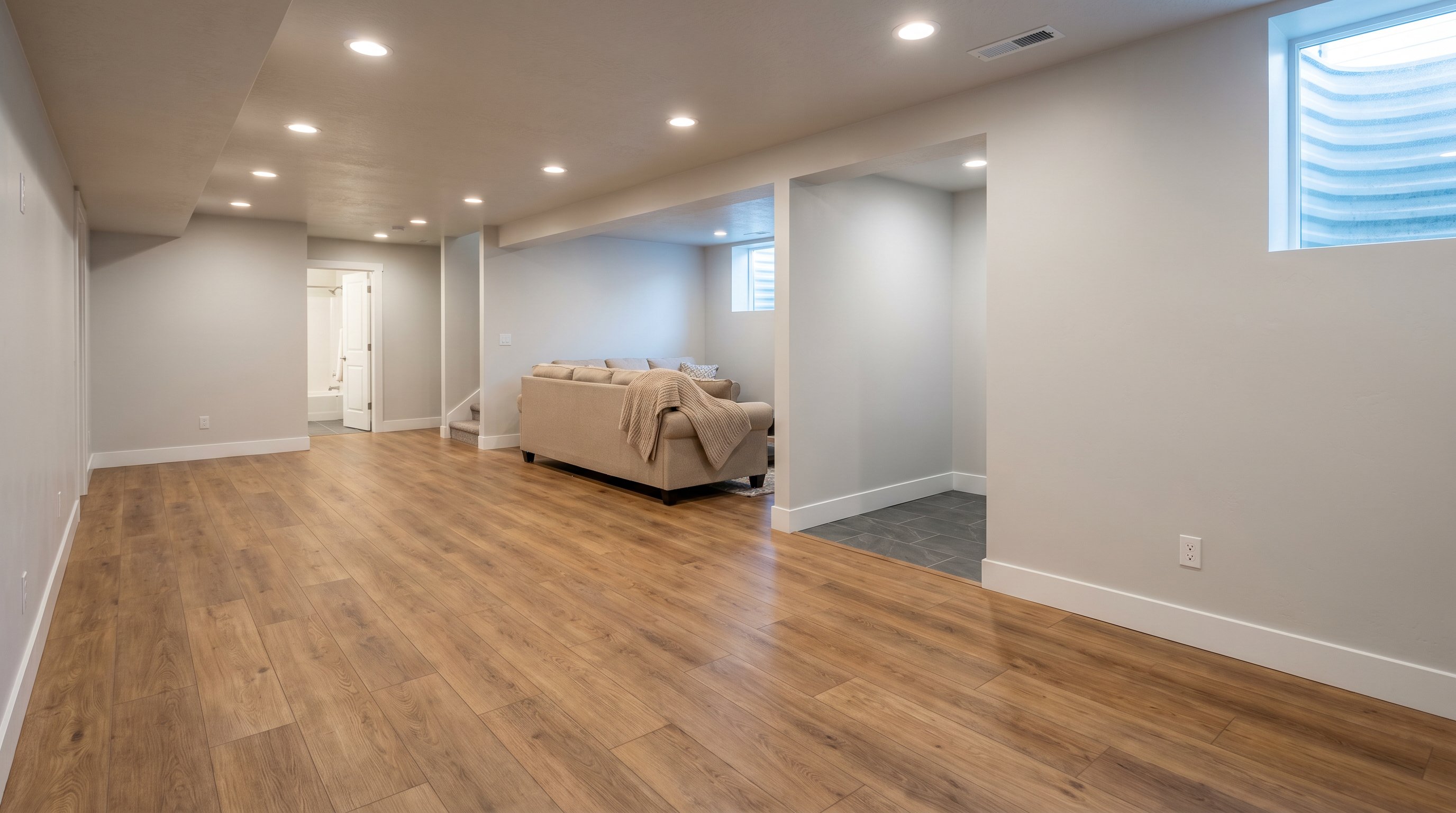
A basement floor can make or break the whole space. We've walked into Orem basements where the air felt cold enough to bite through socks, and we've seen others transformed into warm family rooms, gyms, and mother-in-law apartments simply by choosing the right material from the start. In Utah, that decision isn't just about looks. Snowy winters, dry summers, and the occasional moisture issue along the Wasatch Front all change what works below grade. Here, we'll break down the best basement flooring options, what we've tested in real projects, and where each one fits best.
What Orem Homeowners Should Consider Before Choosing Basement Flooring
The biggest surprise for many homeowners is this: basement flooring usually fails because of conditions underneath it, not because of the top surface. Before we recommend anything, we inspect the slab for cracks, moisture, and flatness. On homes along the Wasatch Front, settling soil and freeze-thaw cycles can create hairline movement that matters once new flooring goes in.
In Orem, we also factor in how the basement will actually be used. A TV room has different needs than a home gym, basement bathroom, or ADU kitchen. For example, impact-heavy gym spaces often perform best with rubber or a durable floating floor over a proper underlayment, while a rental apartment needs waterproof durability and easy maintenance.
Moisture testing matters. The National Wood Flooring Association notes that concrete subfloors must be properly tested before installing many floor types, especially wood-based products. We've used calcium chloride and in-slab RH testing on real jobs because guessing is expensive.
We also look at comfort and budget. Many Utah basement finishes under 1,000 square feet currently land around $52 to $73 per square foot overall, so flooring decisions should support the full project, not hijack it. A smart basement finishing plan starts with the slab, not the sample board.
Luxury Vinyl Plank: The Best All-Around Choice For Most Basements
If we had to pick one material for the average basement, it would be luxury vinyl plank. LVP is the option we install most often because it handles moisture, temperature swings, and daily wear better than almost anything else at its price point. In practical terms, that means fewer callbacks and fewer regrets.
On recent Utah basement projects, we've used rigid-core LVP in family rooms, hallways, and basement kitchens because it stays stable where solid hardwood would struggle. Many quality products are fully waterproof, and wear layers commonly range from 12 to 20 mil. For active households, we usually steer clients toward 20 mil for better dent and scratch resistance.
The other advantage is warmth underfoot, especially when paired with the right underlayment or subfloor panel system. In one basement remodel near University Place, swapping bare concrete for LVP made the room feel noticeably less harsh the same day furniture went back in.
LVP also works beautifully with 2026 upgrades like moody wet bars, home theaters, and golf simulator zones. It gives you the wood look without the wood risk. When homeowners ask us to choose a contractor, this is one of the products we discuss first because the installation details matter just as much as the plank itself.
Tile Flooring: Durable And Water-Resistant For High-Moisture Spaces
Tile wins where water is the main enemy. When we're finishing a basement bathroom, laundry area, entry from a walkout, or a spa-style zone with a steam shower or sauna, porcelain tile is usually the safest bet. It doesn't swell, won't trap moisture the way carpet can, and holds up for decades when installed over a properly prepared substrate.
Porcelain is generally denser and less absorbent than ceramic. According to the Tile Council of North America, porcelain tile has a water absorption rate of 0.5% or less. That number matters below grade.
Still, tile has trade-offs. It's hard and often colder than LVP or carpet unless we add radiant heat or a thermal break beneath it. We've seen gorgeous installations feel uninviting simply because the floor was technically durable but physically uncomfortable.
For basement bathrooms and utility zones, though, tile is hard to beat. Large-format porcelain can also make smaller basements look cleaner and more upscale. In older homes near central Orem, where moisture around mechanical rooms is more common, tile often gives homeowners the peace of mind they wanted from day one.
Engineered Wood And Laminate: When A Wood Look Makes Sense Below Grade
A real wood look in a basement can work, but only when the product and conditions are right. We say this carefully because solid hardwood is almost never our recommendation below grade in Utah. Engineered wood, but, can make sense in dry, well-tested basements where homeowners want a warmer, higher-end finish than vinyl.
Engineered wood is built in layers, which makes it more dimensionally stable than solid wood. That matters in a state with sharp seasonal swings in humidity. The EPA notes that indoor moisture control is key to preventing mold and material damage, and that's exactly why we only consider engineered products after moisture testing and slab prep.
Laminate has improved too. Modern waterproof laminate performs better than older versions, though it's still less forgiving than quality LVP if moisture gets where it shouldn't. We've installed engineered wood successfully in basement living rooms and offices, especially in upscale ADU conversions where the main-floor aesthetic needed to continue downstairs.
The catch? Product selection and installation discipline. Expansion gaps, vapor management, and flatness all matter. A rushed crew can ruin an expensive floor. That's why homeowners planning a larger Utah basement remodel should weigh beauty against basement reality.
Carpet And Carpet Tile: Comfort, Warmth, And Trade-Offs To Know
The first step onto warm carpet in January is convincing. Carpet is still the softest, coziest basement flooring option, and in the right room it absolutely earns its place. We like it most in bedrooms, playrooms, and media spaces where comfort matters more than spill resistance.
But the trade-off is real. Carpet can hold moisture, odors, and allergens if the basement has even a minor humidity problem. The EPA recommends indoor relative humidity ideally stay between 30% and 50%, and once a basement regularly exceeds that range, carpet becomes riskier.
Carpet tile is the smarter variation for many basements. If one section gets damaged, you can replace a few tiles instead of the whole room. We've used carpet tile in home offices and kids' zones where flexibility mattered and pattern variation helped hide wear.
Padding choice matters too. A moisture-resistant pad can improve comfort without creating the same trap as older absorbent pads. For homeowners wanting a warmer basement but worried about leaks, we often combine hard flooring in open areas with carpet only in select rooms. It's a more realistic answer than wall-to-wall softness everywhere.
Concrete Finishes And Subfloor Systems: Practical Options For Utility And Living Areas
Sometimes the smartest basement floor is the one you stop trying to hide. Sealed or polished concrete can be a highly practical finish for utility rooms, storage areas, workout zones, and even some modern living spaces. It's cost-effective, durable, and not bothered by the occasional wet boot or appliance drip.
In custom home gyms, we often pair sealed concrete or a subfloor base with rubber flooring because impact resistance matters more than softness. For context, many rubber gym tiles range from 8 mm to 12 mm thick, enough to absorb dropped dumbbells far better than standard residential flooring.
Where concrete struggles is comfort. On its own, it can feel cold and unforgiving. That's where subfloor systems help. Interlocking dimpled panels or insulated subfloor products create a thermal break above the slab, making finished spaces noticeably warmer and drier. We've used these beneath LVP and engineered wood in basements where homeowners wanted a more comfortable family room without gambling on moisture.
This is also where experienced planning pays off. A thoughtful contractor finish approach considers ceiling height, transitions, and future use before adding floor build-up. In our projects, that early coordination saves headaches later.
Conclusion
The best basement floor in 2026 isn't the trendiest one, it's the one that fits your slab, your moisture conditions, and the way you'll use the space every day. In most Orem homes, we find LVP leads the pack, with tile, engineered wood, carpet, and concrete all filling specific roles well. The key is testing first, then building for Utah reality, not showroom fantasy.