
Trusted Sandy Commercial Contractors For Your Next Business Renovation: How To Choose The Right Team In 2026
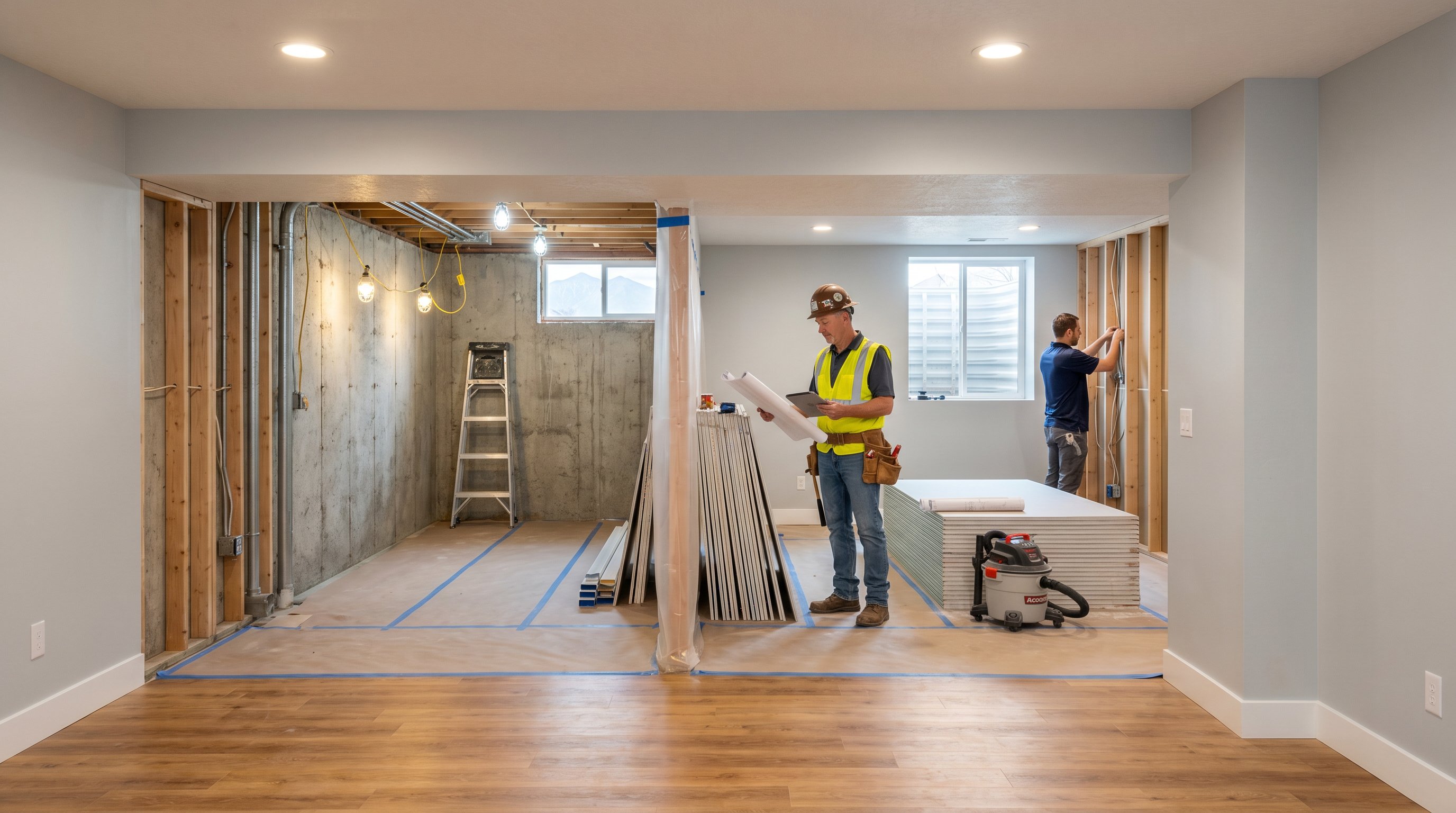
Trusted Sandy commercial contractors can make the difference between a renovation that quietly grows your business and one that drains time, cash, and patience. We've walked active job sites where one bad schedule decision left dust drifting into a retail checkout line by 9:14 a.m., and we've also seen the opposite: phased, well-managed work that customers barely noticed. In a city like Sandy, where businesses sit between busy corridors near State Street, South Towne, and the Wasatch Front commute flow, choosing the right team isn't a small decision. It's the decision that shapes your budget, your timeline, and your reputation.
Why Hiring A Trusted Commercial Contractor In Sandy Matters
The first hard truth: commercial renovations fail less from bad ideas than from bad coordination. In our experience managing Utah construction projects, the costly problems usually start when a contractor underestimates permit timing, trades overlap poorly, or treats an occupied business like an empty shell.
In Sandy, that matters even more because many projects happen in busy mixed-use areas with steady traffic and tight customer expectations. A medical office near South Towne Mall doesn't have the same tolerance for disruption as a vacant warehouse. A restaurant off 10600 South can lose a meaningful chunk of weekly revenue if one phase slips by even 5 to 7 days.
The numbers back that up. According to the U.S. Small Business Administration, cash flow is one of the biggest reasons small businesses struggle, and unplanned renovation delays put immediate pressure on that cash position. Meanwhile, the U.S. Census Bureau's construction data continues to show how volatile nonresidential construction timing and costs can be.
That's why trust isn't a soft quality. It shows up in licensing, documentation, scheduling, and how a contractor protects operations during demolition, framing, electrical, and finish work. We've found that the best commercial teams aren't simply builders: they're planners who solve problems before your staff and customers feel them.
What To Look For In A Commercial Renovation Partner
The quickest filter is this: if a contractor can't explain exactly how they handle risk, communication, and sequencing, they're probably not the right fit. We've sat in walk-throughs where a promising bid fell apart the moment we asked who would coordinate inspections, who would issue weekly updates, and what happened if lead times changed on flooring or mechanical equipment.
A strong renovation partner should give you specific answers, not polished vagueness. They should be able to map the project from pre-construction through closeout, identify the longest-lead materials, explain how they'll protect occupied areas, and flag code or accessibility issues early. For businesses comparing bids, this is also where low-price proposals can become expensive fast: we've seen unrealistically cheap numbers balloon after change orders, incomplete scopes, and rework. That same pattern is why conversations around cheap contractors matter well beyond residential jobs.
And if the company already handles business spaces across multiple Utah counties, that usually signals stronger systems, deeper trade relationships, and more predictable execution.
Local Experience, Licensing, And Project Management Standards
The surprise here is how often "experience" turns out to mean something vague. We think local experience should mean a contractor understands Utah permitting, inspection sequencing, subcontractor availability, snow-season logistics, and the realities of building in active spaces, not just that they've been in business a long time.
At minimum, confirm the contractor is properly licensed and insured in Utah through the Utah Division of Professional Licensing. Ask who pulls permits, who manages site safety, and who owns the daily schedule. We prefer a documented process: pre-construction checklist, scope confirmation, weekly production meetings, and written change-order approval before extra work begins.
Specifics matter. On one occupied renovation we reviewed, the team avoided a full shutdown by splitting demolition into 2 night phases, isolating dust with temporary barriers, and re-routing staff access before 7:00 a.m. That kind of planning is project management, not luck.
In Sandy and nearby Salt Lake County, local knowledge also helps with subcontractor coordination and city review expectations. The best teams don't just know code, they know how to keep code compliance from turning into a schedule surprise.
Communication, Scheduling, And Budget Transparency
The clearest sign of a trustworthy contractor is simple: you rarely have to guess what's happening. We've found that owners can tolerate a lot, noise, temporary inconvenience, even phased closures, if they get clear updates before problems hit.
A good partner should provide a realistic schedule with milestones, not a vague "8 to 10 weeks" and a shrug. Ask for start dates, inspection checkpoints, long-lead procurement deadlines, and the decision dates you must meet to avoid delays. Budget transparency should be just as concrete. You want line items, allowance clarity, and written documentation for every change.
This is where Panden's approach lines up with what we'd advise anyway: licensed and insured work, proactive service, daily cleanliness expectations, and weekly updates so clients know exactly what phase construction is in. That sounds small until you've lived through a project where nobody can tell you whether drywall starts Monday or "sometime next week."
According to a 2024 Dodge Construction Network industry outlook, labor constraints and material lead times remain top causes of project disruption. Contractors who communicate early on those issues protect budgets better than contractors who simply apologize later.
Common Business Renovation Projects In Sandy
What surprises many owners is how similar the underlying goals are, even across very different properties: improve customer experience, support staff workflow, and make the space earn more. In our review of local commercial work, the most common projects in Sandy tend to fall into a few categories.
Tenant improvements are the big one, especially offices, retail suites, and medical or wellness spaces. These often include new partitions, lighting upgrades, flooring replacement, reception redesign, and ADA-focused bathroom improvements. Restaurant and service businesses frequently need back-of-house reconfiguration, plumbing updates, and more durable finish selections.
We also see a lot of value-driven refreshes rather than full gut renovations. A 1,500-square-foot office might only need paint, LVP flooring, acoustic improvements, and a better front desk to feel dramatically different. The U.S. Department of Energy notes that commercial lighting upgrades alone can cut lighting energy use substantially when older systems are replaced with LEDs and controls.
Around busy corridors near State Street or shops serving neighborhoods around Crescent and east Sandy benches, phased remodels are often the smartest route. They let businesses stay open while upgrading the spaces customers actually notice first: entry, service counters, bathrooms, and waiting areas.
How A Well-Planned Renovation Supports Daily Operations And Long-Term Value
The payoff starts earlier than most owners expect. A well-planned renovation doesn't just create a nicer-looking space at the end: it protects operations during construction and improves performance after the dust settles.
We've seen this firsthand in phased remodels where the right sequencing kept revenue flowing. One example: by isolating customer-facing work behind temporary walls and shifting louder demolition to off-hours, a business stayed open 6 days a week instead of shutting down for 3 full weeks. That kind of planning can preserve thousands in sales, payroll stability, and customer trust.
Long term, thoughtful renovations can reduce maintenance, improve staff retention, and strengthen leasing or resale value. Better lighting, cleaner circulation paths, durable flooring, and updated mechanical systems all matter. According to the U.S. Energy Information Administration, lighting, space cooling, and ventilation remain major energy uses in commercial buildings, so efficient upgrades have measurable operating impact.
A good contractor should be able to connect design choices to business outcomes: fewer service interruptions, easier cleaning, better acoustics, stronger first impressions, and more flexible use of square footage. That's the difference between remodeling for appearances and renovating with a business case behind it.
Conclusion
Choosing trusted Sandy commercial contractors comes down to one question: who can protect your business while improving your space? We'd look for local experience, Utah licensing, disciplined project management, and communication that stays clear when conditions change. In 2026, the right renovation partner won't just build well, they'll help your business keep moving while the work gets done.