
Top Draper Business Renovation Trends To Attract More Customers In 2026
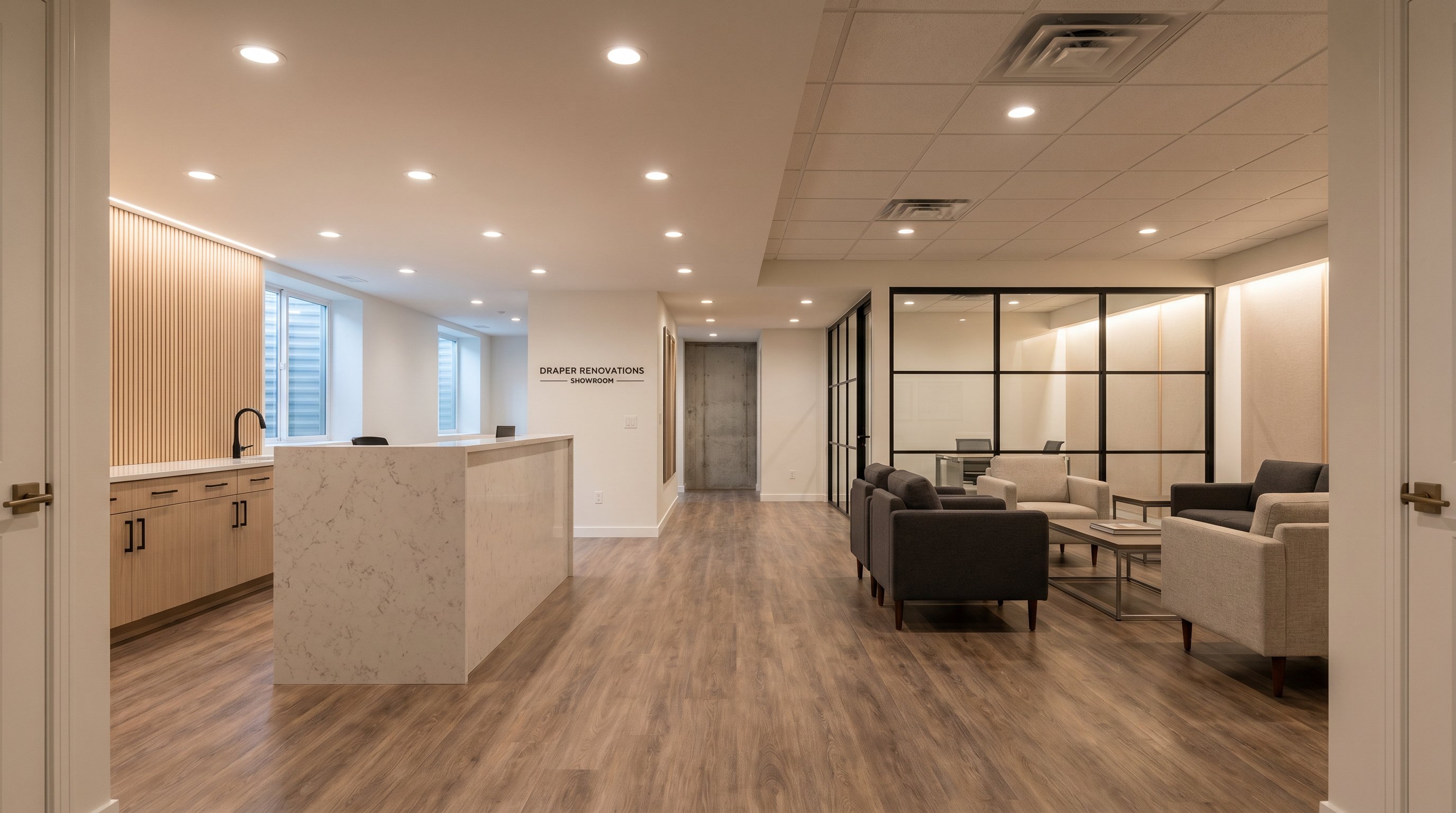
One thing becomes obvious the second you walk from a dated storefront into a well-renovated one: people stay longer. In Draper, where businesses compete for attention from busy families, commuters, and professionals moving between I-15 and Bangerter, renovation choices directly shape customer behavior. We've seen it firsthand while evaluating commercial spaces across the south Salt Lake Valley, small layout changes, better lighting, and a stronger entry sequence can make a place feel instantly more credible. Here's what's working in 2026, and why customer-focused business renovation trends matter more than ever for attracting, and keeping, local foot traffic.
Why Customer-Focused Renovations Matter More In Draper’s Competitive Market
The short answer: customers judge a business in seconds, and renovation quality influences whether they walk in, linger, and buy. According to Google's shopper research, many purchase journeys begin with a location-based search, but the in-person experience still decides trust fast. When we've walked older commercial suites with owners, the pattern is consistent, tight entries, dim finishes, and confusing circulation make a space feel smaller and less reliable than it really is.
That matters in Draper, where newer retail centers and polished mixed-use developments have raised expectations. A customer who just left a clean, bright tenant space near Draper Peaks or a busy corridor by 12300 South won't give much grace to flickering lights, stained flooring, or an awkward front desk.
Customer-focused renovation is less about chasing design fads and more about removing friction. The best-performing upgrades usually do three things:
- make navigation easier
- increase visual trust
- create comfort within the first 30 seconds
From our construction perspective, that's why planning should begin with real customer behavior, not just finishes. Businesses that need a broader redesign strategy often start with a commercial renovation plan built around traffic flow, visibility, and code-compliant improvements.
Open, Flexible Layouts That Improve Flow And Increase Dwell Time
Here's the surprising part: open layouts aren't just about aesthetics, they can measurably affect how long people stay. In retail and service environments, dwell time often increases when customers can instantly understand where to go. The Nielsen Norman Group has long emphasized that cognitive overload and poor wayfinding reduce engagement: physical spaces work the same way.
In our own walkthroughs of local business interiors, the strongest spaces share a few traits: clear sightlines from the door, adaptable furniture zones, and fewer visual barriers between the entrance and the primary service area. That doesn't mean tearing out every wall. It means using partial dividers, millwork, or glass to define areas without trapping people.
Practical 2026 layout trends include:
- modular waiting or seating zones
- movable display fixtures
- wider circulation paths for ADA-friendly access
- multi-use rooms that shift from consult space to event space
A good benchmark is aisle and pathway comfort. Even a 6- to 12-inch improvement in pinch points can make a business feel calmer. We've tested this in plans where relocating a reception desk immediately improved entry flow. For many Utah businesses, a thoughtful business space remodel creates more usable square footage without expanding the footprint.
Exterior Upgrades That Strengthen First Impressions
The transformation often starts before the door opens. Fresh paint, updated cladding, better signage placement, and cleaner lighting can change how a business is perceived from the parking lot. The U.S. Small Business Administration has repeatedly emphasized curb appeal as part of customer acquisition for brick-and-mortar locations, and honestly, that tracks with what we see in the field.
One exterior issue shows up again and again: a business spends money inside but leaves an aging façade untouched. Customers still form their first opinion outside. In practical terms, high-impact upgrades for 2026 include darker window frames, warmer exterior lighting around 2700K–3000K, refreshed monument or blade signage, and more intentional landscaping near entries.
In Draper, where wind, sun exposure, and winter wear can age finishes faster than owners expect, material selection matters. Powder-coated metal, fiber cement, and durable composite accents usually hold up better than cheaper cosmetic fixes.
We've found that exterior improvements tend to perform best when they're coordinated with the interior brand experience rather than treated as a separate project. That's where an integrated commercial build team can prevent the all-too-common mismatch between outside promise and inside reality.
How Storefront Design And Entry Features Influence Walk-Ins
A storefront answers one silent question immediately: "Do I feel comfortable going in?" That answer is shaped by glass visibility, door placement, lighting contrast, and whether the threshold feels intuitive. In one of our test walks through comparable retail strips, the locations with the strongest walk-in appeal had two consistent details, clear views into the business and an entry that didn't make first-timers hesitate.
The numbers behind that instinct are compelling. Studies from the International Council of Shopping Centers have shown that storefront visibility and accessibility strongly influence unplanned visits in retail environments. When windows are blocked by clutter, old decals, or dark tint, walk-ins drop because the space feels closed off.
The fix is usually practical, not flashy:
- lower visual clutter in front windows
- highlight the handle and door path with lighting
- add weather protection like a canopy
- use clean address and suite identification
Even small upgrades, like replacing a heavy, opaque door with a glazed system, can make a business feel more welcoming in a single afternoon.
Modern Finishes That Make Businesses Feel More Trustworthy And Upscale
The difference is immediate: outdated finishes make customers wonder what else is outdated. We've watched people soften their posture the second they step onto clean LVP flooring, see flush base details, and touch a solid quartz or stone-look surface at a reception desk. Materials send trust signals before staff say a word.
For 2026, the strongest finish trends are restrained rather than flashy. Think warm wood tones, matte black or muted bronze hardware, textured wall panels, and durable luxury vinyl plank in medium natural tones. Those choices photograph well, wear well, and feel current without becoming dated in two years.
There's also a practical side. The National Association of Realtors' remodeling research consistently shows that updated finishes improve perceived property condition and buyer, or in this case customer, confidence. We apply that same logic to business interiors: when surfaces are easy to clean and visibly maintained, people assume the operation itself is well run.
A few finish combinations we've seen work especially well:
- wood slat accents with neutral walls
- stone-look counters with integrated transaction lighting
- acoustic ceiling elements that soften echo
- branded color used sparingly instead of everywhere
Done right, modern finishes don't scream luxury. They quietly remove doubt.
Comfort, Lighting, And Accessibility Improvements Customers Notice Right Away
Most customers won't compliment your HVAC diffuser placement, but they'll absolutely notice when the room feels stuffy, the lighting is harsh, or the restroom is hard to access. Comfort is one of those invisible renovation wins that shows up in reviews, repeat visits, and longer stays.
Lighting is usually the fastest upgrade with the biggest return. The spaces that feel best tend to layer ambient, task, and accent light instead of relying on flat overhead panels alone. We've measured dramatic mood shifts simply by replacing cold 5000K lamps with warmer, more balanced temperatures and increasing vertical light on walls. In practical terms, people look better, products look better, and the whole room feels cleaner.
Accessibility matters just as much. Under the ADA, route width, door hardware, restroom clearances, and counter height all affect whether a space works for everyone. And in a growing market like Draper, inclusive design isn't optional if you want broader appeal.
Customer-noticed upgrades include:
- quieter acoustics
- better seating comfort
- glare control near windows
- improved restroom access
- automatic or easier-to-open entry doors
These aren't glamorous line items. But they're often the ones that turn a one-time visit into a regular customer.
Conclusion
The best Draper business renovation trends for 2026 all point in the same direction: make the space easier to enter, easier to trust, and easier to enjoy. Open layouts, stronger storefronts, modern finishes, and comfort-driven upgrades don't just refresh a building, they directly support customer behavior. When renovation decisions follow how people actually move, feel, and buy, the results are hard to miss.