
Mother-in-Law Suites in Utah: What the Law Allows and What to Plan For
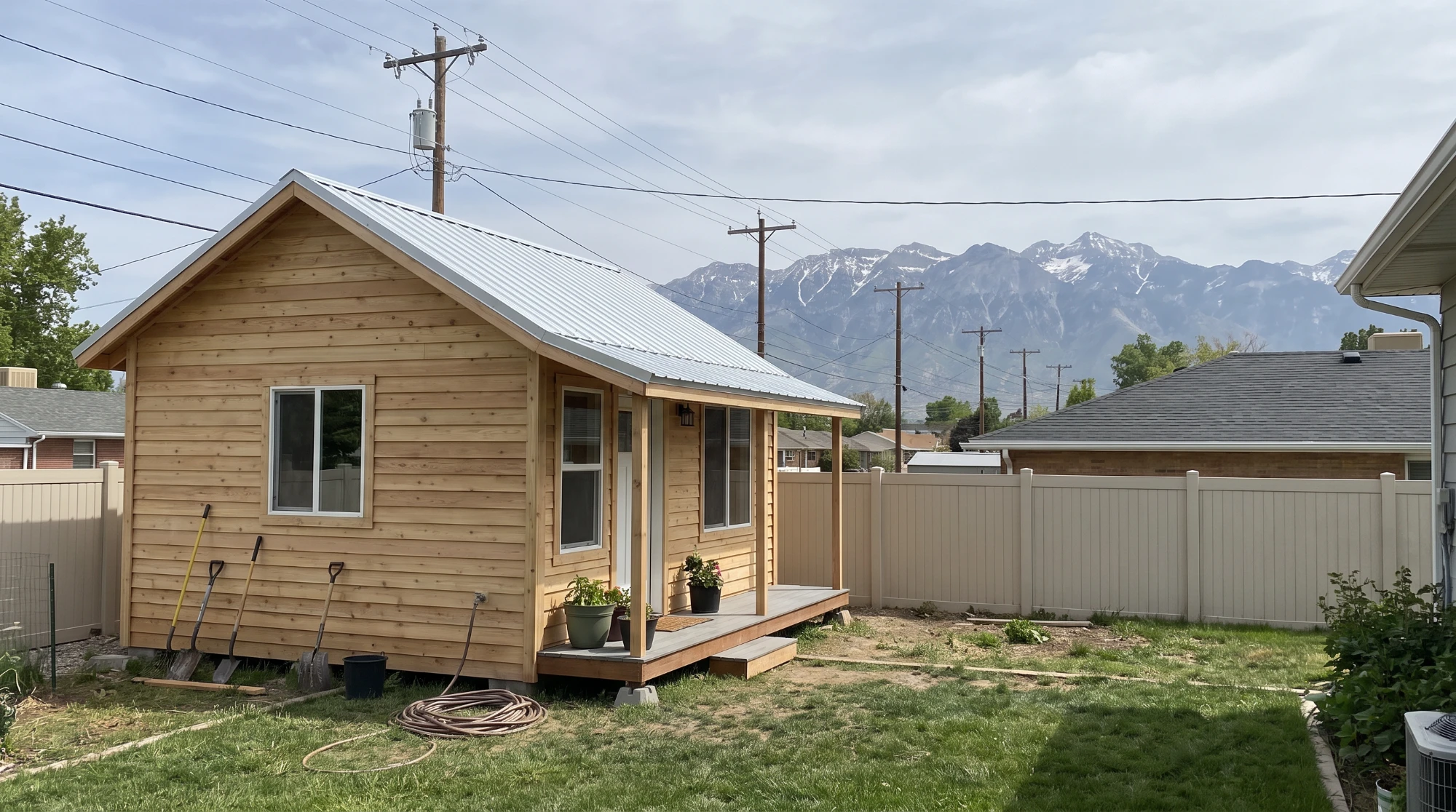
A mother-in-law suite is a self-contained living area inside your home: a bedroom, a bathroom, usually a kitchenette or kitchen, and most often a private entrance. In a Utah basement it's one of the most common ways to house a parent, an adult child or a renter without buying another property. The part that trips people up is that the law cares less about what you call it and more about who lives there and whether it's rented.
What Utah state law says
Utah treats a suite built inside an owner-occupied home as an "internal accessory dwelling unit." Under Utah Code 10-9a-530:
- It's a permitted use in areas zoned primarily for residential use.
- The definition is specific. An internal accessory dwelling unit is created inside the primary dwelling, within the home's existing footprint, for the purpose of a long-term rental of 30 consecutive days or longer. The primary dwelling is a detached single-family home occupied as the owner's primary residence.
- Cities can't restrict the suite's size relative to the home, the total lot size, street frontage, or internal connectivity for one internal unit.
- It must meet building, health and fire codes.
Cities are allowed to keep a few controls. A city may:
- require one additional on-site parking space for the suite (unless the city already requires four off-street spaces)
- prohibit a separate utility meter
- require that the home still look like a single-family home
- require the owner to get a permit or license to rent the suite
- prohibit the suite on a lot of 6,000 square feet or less
- prohibit rentals under 30 days
- prohibit renting the suite if the owner doesn't live in the home
- record a notice on the property, and place a lien for violations
So the same suite can be easy in one city and need a registration in another. Check yours before you design anything.
A family suite and a rental suite aren't always treated the same
The statute defines an internal accessory dwelling unit as one built for long-term rental. A suite used only by family may be handled differently from a rented one, and cities vary on whether they ask for a registration, an affidavit or a recorded notice. In either case, the construction still has to be permitted and inspected, and the space still has to meet the building and fire codes below. Ask your city how it classifies a suite that has a kitchen.
What the building code requires
These are the rules that most often shape the layout of a basement suite.
Bedroom escape openings. Every basement bedroom needs an egress window or door: at least 5.7 square feet of clear opening, at least 24 inches high and 20 inches wide, with the sill no more than 44 inches off the floor. Below grade, the window well must be at least 9 square feet and extend at least 36 inches from the wall, with a permanent ladder or steps if it's deeper than 44 inches (2021 IRC R310). If the basement doesn't have a qualifying window, the suite needs one cut into the foundation, which is often the largest single item in the plan.
Ceiling height. Living space needs a ceiling of at least 7 feet, with ducts and beams allowed down to 6 feet 4 inches. See our guide to basement ceiling options in Utah.
Fire separation. Utah's version of the code adds an exception to the IRC's two-family separation rule (R302.3): an accessory dwelling unit separated by walls and floor assemblies covered with at least half-inch gypsum board, or equivalent, on each side is exempt from it. Fireblocking and under-stair protection still apply.
Smoke and carbon monoxide alarms. Utah amends the IRC (R314.2.2 and R315.2.2) so the alarm rules that apply when work is done in an existing home also apply when an accessory dwelling unit is created. The base code puts smoke alarms in each bedroom, outside each sleeping area and on each level. Carbon monoxide alarms are required too, and Utah's amendment to R315.3 adds that they go on each level of the dwelling unit. Some cities, such as Herriman on its internal ADU checklist, also require the alarms to be interconnected.
Stairs. The stairs to a basement suite are held to Utah's stair amendment, which sets a maximum riser height of 8 inches. That matters if a suite will house an older parent.
Moisture and radon. Both are easier to deal with before the walls close. See basement moisture before finishing.
How local rules differ: a few of our cities
- Saratoga Springs. The owner must occupy a portion of the home. You register the suite with the city and usually need a building permit. The lot must be larger than 6,000 square feet, only one internal unit is allowed per lot, and most plats recorded before October 1, 2021 aren't eligible, so the city publishes a map. The suite needs one paved off-street parking space (9 by 18 feet, behind the front setback), a separate exterior entrance, a sleeping area, a kitchen and a bathroom, and rentals must be 30 days or longer. See our Saratoga Springs basement page.
- Herriman. Herriman has its own internal ADU application and affidavit, and its checklist spells out the egress and alarm details. See our Herriman page.
- South Jordan. South Jordan has an ADU guidebook and a notarized owner-occupancy affidavit that's recorded with the county. See our South Jordan page.
- Lehi. See our Lehi page for the permit steps.
Always confirm the current rule with the city's building and planning staff. These ordinances change.
Planning the layout
- Entrance. A private entrance makes the suite feel separate and makes the rules easier to meet. A walkout or side door is simplest. Cutting a new entrance through the foundation is a bigger job.
- Kitchen or kitchenette. A full second kitchen is often what makes a space a second dwelling unit in a city's eyes. A wet bar or kitchenette may be treated differently. Herriman, for example, has a separate process for adding a kitchen or wet bar. Ask before you draw it.
- Laundry. Decide whether the suite gets its own washer and dryer or shares the main laundry. It changes the plumbing and the layout.
- Heating and cooling. Decide whether the suite shares the home's system or gets its own thermostat zone. Sharing is simpler. A separate zone gives the occupant control.
- Sound. Insulation in the joist bays and a drywall ceiling make a noticeable difference between the suite and the kitchen above.
- Aging in place. If the suite is for a parent, it's cheapest to plan it in at the start: wider doorways, a shower without a high curb, blocking in the walls for grab bars later, good lighting, and as few steps as possible between the bedroom, bath and entrance. These are design choices, not code requirements.
What drives the cost
Every basement is different, so we bid from a walkthrough, not a price per square foot. These are the things that move the number most:
- A bathroom, and whether the plumbing was roughed in when the house was built
- Egress: using a window that already qualifies, or cutting a new opening and well
- A private entrance, if the basement doesn't already have one
- A kitchen or kitchenette
- Ductwork, the ceiling and sound control
- Separate heating, cooling or utilities, if the plan calls for them
- Finish level: flooring, cabinets, fixtures and trim
- Square footage and the number of rooms
- Permit and registration requirements in your city
You get an itemized bid, so you can see where the money goes and decide what to keep, change or save for later.
How the process works
- Check eligibility with your city: zone, lot size, plat date, HOA rules and parking.
- Decide who the suite is for: family only, or a long-term rental.
- Walkthrough: we look at egress, ceiling height, ducts, plumbing rough-ins and the panel.
- Itemized bid and plans.
- Permit, and registration if your city requires it. We prepare the plans and submit them.
- Build and inspections, then a final inspection and walkthrough.
Frequently asked questions
Do I need a permit to build a mother-in-law suite in Utah?
Yes. Finishing a basement into a suite needs a building permit, and many cities also want the suite registered or an affidavit recorded.
Can I rent my mother-in-law suite?
Often yes, if your city allows it and you live in the home. State law lets cities prohibit renting an internal unit if the owner doesn't occupy the home, and prohibit rentals shorter than 30 days.
Can I use it as a short-term rental?
Cities can prohibit rentals under 30 consecutive days, and many do. Check yours.
Does the suite need its own utility meter?
Not necessarily. State law lets a city prohibit a separate meter, and some cities allow one. Saratoga Springs, for example, allows separate meters in the owner's name.
Does the suite need a separate entrance?
It depends on the city. Saratoga Springs lists a separate exterior entrance. Herriman's checklist asks for interior access unless the unit has adequate egress. Ask before you design.
How many bedrooms can it have?
As many as the layout and egress allow. Each bedroom needs its own qualifying escape window or door.
Does the owner have to live in the house?
For an internal accessory unit rented out, the state definition assumes the home is the owner's primary residence, and cities can require it.
Does the ceiling matter?
Yes. It sets how much height you keep and how the unit is separated from the rest of the house. See our ceiling options guide.
Sources: Utah Code 10-9a-530 (internal accessory dwelling units); Utah Code 15A-3-202 (Utah amendments to the International Residential Code, including R202, R302.3, R314.2.2, R315.2.2, R315.3 and the stair amendment); 2021 International Residential Code R310 (emergency escape and rescue openings); City of Saratoga Springs, accessory unit rental FAQ; City of Herriman internal ADU application and checklist; City of South Jordan ADU affidavit and guidebook.