
ADU Cost in Utah: What Drives the Price
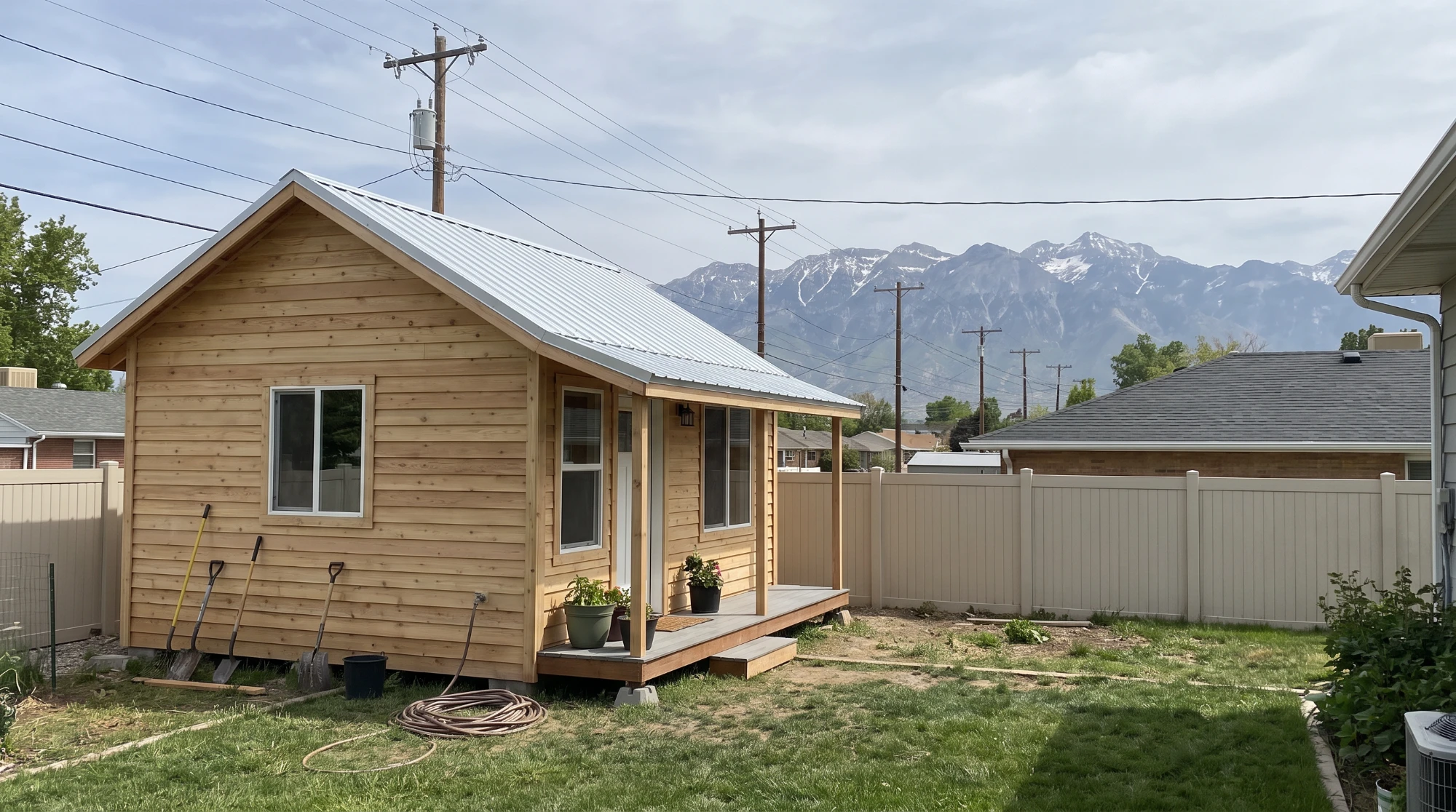
The cost of an ADU in Utah depends less on its square footage than on what has to happen around it: the site, the utilities, the kind of unit and what's inside. A detached unit in a yard with sewer, water and power close by is a very different job from one that needs long utility runs or a foundation on a slope. PANDEN bids from a walkthrough and a site visit, not a price per square foot. This guide explains why, what moves the number most, and how to read a bid so you can compare it fairly.
First, which kind of ADU?
The two kinds in Utah law carry different costs.
- An internal ADU is built inside your existing home, within its footprint, usually in a basement. There's no new foundation, roof or exterior, and the utilities are already there. The cost is mostly the interior work, an egress window, a bathroom, a kitchen and a private entrance. See mother-in-law suites in Utah and basement finishing cost.
- A detached ADU is a separate building on your lot. It needs its own foundation, structure, roof and exterior, plus a connection to utilities. Everything in an internal unit, plus a small house around it. See ADU zoning and permits in Utah.
If you already have a detached garage or other legally built accessory structure, Utah's 2026 detached ADU law requires cities to offer a process for converting it, which can change the scope.
What moves the cost of a detached ADU most
1. The site. Slope, soil, access for equipment, the distance from the street and any easements or setbacks decide how much site work is needed before anything is built. A tight side yard is a different job from an open back lot.
2. Utilities. Sewer, culinary water, electrical and storm water all have to reach the unit, and the city can prohibit a unit that can't get adequate service or whose connection point lacks capacity (Utah Code 10-21-304). The distance from the home to each connection and the trenching between them are often the largest surprise. Ask what's included, and what happens if the work is bigger than expected. Your electrical panel may also need to be upgraded to serve a second unit.
3. Foundation and structure. The foundation type, the soil and the roof and wall design all affect the price. How the unit is built, on site or as factory-built sections set on a foundation, changes the schedule and where the work happens, and can change what's in the bid.
4. Size and layout. More square feet cost more. A simple rectangular plan costs less than one with offsets and a complicated roof. Keep in mind that a city can cap the size of a detached ADU relative to the house.
5. A kitchen and a bathroom. An ADU is a full dwelling, so it has both. The plumbing runs, fixtures, cabinets and counters add up quickly, and they sit in a small space.
6. Heating and cooling. A small unit still needs a system sized for it. Some cities, such as Herriman, ask for load calculations (Manual J and S) with the permit application.
7. Plans and engineering. Complete drawings, a site plan with setbacks, a gas line diagram and energy efficiency documents can all be required, and plans examiners can ask for engineered, stamped plans. Herriman's detached ADU page lists these.
8. Permits, fees and plan review. Cities charge application review and building permit fees, and may charge utility connection or impact fees. These vary by city, so ask for them in writing. See the local steps for Lehi, Saratoga Springs, Herriman and South Jordan.
9. Parking. A city can require up to two on-site spaces for a detached ADU of 650 square feet or more, and one for a smaller unit. If you're converting a detached garage, the city can require the parking to be replaced.
10. Fire and building code. Walls close to a property line bring fire-resistance requirements and limit windows (IRC R302.1). Utah's amendments also require smoke and carbon monoxide alarms when an ADU is created.
11. Finish level. Flooring, cabinets, counters, windows, doors, lighting and fixtures swing the total more than almost anything else once the structure is set.
12. Separate systems and meters. Whether the ADU gets its own meter, its own water line or shares the home's, and whether it has its own heating, changes the utility work. State law lets a city prohibit a separate meter on an internal ADU, and rules for detached units are set by each city.
13. Landscaping and site finishes. Fencing, a path, a patio, drainage and restoring the yard after construction are real items. Ask whether they're in the bid.
14. What's hidden. Buried lines, rock, poor soil or a utility that's not where the plans say can change the plan once the ground is open. A good bid says how that will be handled.
What a good bid looks like
Ask for an itemized bid that separates the building from the site. Look for:
- Site work and utilities listed separately, with the distance and the connection points assumed
- Plans, engineering and permit fees, and who pays and files each
- Allowances for flooring, cabinets, fixtures and lighting, with the amounts
- Exclusions, including landscaping, fencing and any work on the existing home
- A plan for surprises in the ground or at the utility connection
- How changes are priced, in writing, before the work
- A payment schedule tied to finished stages
For the full checklist, see how to choose a basement contractor. The questions about license, insurance and liens apply to an ADU too.
Ways to keep the cost under control
- Confirm eligibility first. Zone, lot size, easements, HOA rules and city requirements decide whether a unit is allowed and where.
- Get the utilities answered early. Ask the city and the utility providers about capacity and connection points before you design.
- Choose a simple form. A compact, rectangular plan with a standard roof costs less to build.
- Consider a conversion. An existing, legally built accessory structure may be cheaper to convert than to replace, if the city's process and the building's condition allow it.
- Decide the use first. Family, a long-term rental or both changes the layout, the parking and the paperwork.
- Spend where it's hard to change later. Foundation, structure, utilities and insulation are costly to redo. Finishes are easier to upgrade.
Is it worth it?
An ADU adds a second home on your lot, and what it's worth depends on what you use it for: a place for family, rental income, or both. State and city rules decide whether you can rent it, for how long and whether you have to live on the property. For a detached unit, a city can bar rentals shorter than 90 days and can require the owner to live in the house or the ADU. See ADU zoning and permits in Utah before you plan on rental income.
How PANDEN prices an ADU
PANDEN builds detached accessory dwelling units for rentals and mother-in-law suites in Utah and Salt Lake counties. Every project starts with a conversation about what you want and a look at your lot, followed by an itemized bid. We prepare the plans, submit the permit and schedule the inspections. See our ADU page.
Frequently asked questions
How much does an ADU cost in Utah?
It depends on the kind of unit, the site and the utilities, the size and the finish level. That's why PANDEN bids from a walkthrough and a site visit instead of quoting a number up front.
Is a basement ADU cheaper than a detached one?
Usually less building is involved, because the foundation, roof and utilities are already there. The cost is mostly in the interior work, egress and the kitchen and bath.
What's the biggest cost in a detached ADU?
Often the site work and utility connections, then the kitchen, the bath and the finish level.
Do I need separate utilities?
It depends on the city and the unit. Ask what your city allows and what the utility providers require.
Will I need a permit and engineered plans?
Yes, you'll need a permit. Some cities ask for engineered, stamped plans, load calculations and a gas line diagram. Ask your city.
Can I turn my garage into an ADU?
Cities have to offer a process for converting a legally built accessory structure, and can require parking to be replaced if it's a detached garage.
Can I rent my ADU?
Often yes, within your city's rules. See our guide to ADU zoning and permits.
How do I compare two ADU bids?
Line them up on site work, utilities, plans and permits, allowances and exclusions. See how to choose a contractor.
Sources: Utah Code 10-21-303 (internal accessory dwelling units) and 10-21-304 (detached accessory dwelling units, effective October 1, 2026); Utah Code 15A-3-202 (Utah amendments to the International Residential Code, including R302.3, R314.2.2 and R315.2.2); 2021 International Residential Code R302.1 (exterior walls); City of Herriman detached ADU page.