
Eagle Mountain Commercial Construction Costs And Zoning Rules: What To Budget For In 2026
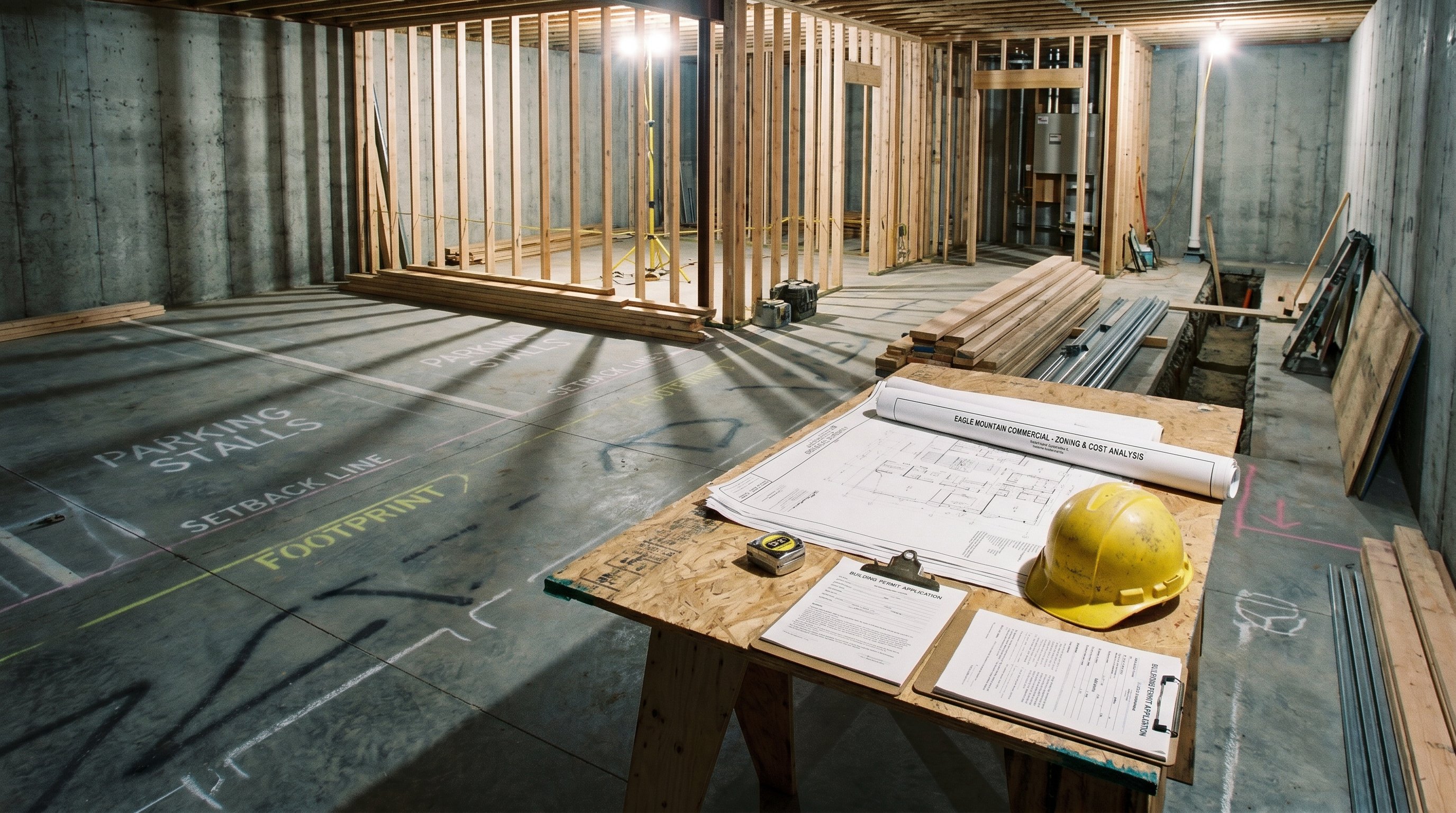
Commercial construction in Eagle Mountain looks straightforward on paper, until the first real numbers hit. We've seen budgets shift fast when grading, utility extensions, parking counts, and zoning constraints show up in preconstruction. In 2026, the smart move isn't just pricing the shell: it's understanding what the city will require before plans go out for bid. Below, we break down the cost drivers, zoning rules, and early-stage fees that matter most so you can budget with fewer surprises and move from concept to permit with a lot more confidence.
What Drives Commercial Construction Costs In Eagle Mountain
The biggest cost driver in Eagle Mountain is often site work, not the building itself. We've reviewed Utah County projects where early pricing looked manageable, then jumped after geotechnical reports, utility trenching, and off-site improvements were added.
Land conditions matter. In this part of Utah, expansive soils, slope adjustments, and drainage planning can raise excavation and foundation costs before vertical construction even begins. Labor and material pricing still matter too: according to the U.S. Bureau of Labor Statistics, construction input prices have stayed volatile in recent years, especially for concrete, steel, and mechanical equipment.
From our experience pricing construction scopes along the north Utah County growth corridor, three line items tend to move budgets fastest:
- Site development: grading, retaining, stormwater, curb, gutter, and paving
- Utilities: water, sewer, power, gas, and telecom extensions
- Code-driven systems: fire sprinklers, accessibility upgrades, and energy compliance
And in Eagle Mountain, distance from existing infrastructure can be a real multiplier. A seemingly simple commercial pad near Ranches Parkway can price very differently from one closer to established service lines.
Typical Cost Ranges By Building Type And Project Scope
The fastest way to miss a budget is to use a generic national average. In 2026, commercial construction costs in Eagle Mountain can vary sharply by occupancy, finish level, and site complexity.
Based on current Utah market pricing we've tracked, these are practical starting ranges for hard construction costs, excluding land, major off-site work, and financing:
- Basic warehouse or flex shell: about $140–$210 per square foot
- Standard retail or office space: about $180–$290 per square foot
- Medical or restaurant build-outs: about $250–$400+ per square foot
Tenant improvements can be just as wide. A light office refresh may stay near $80–$140 per square foot, while a full restaurant fit-out with grease interceptor, hood, upgraded HVAC, and custom finishes can exceed $300 per square foot.
We've also seen owners overlook soft costs. Design, engineering, permits, testing, legal review, and contingency often add 20% to 35% on top of hard costs. Data from RSMeans and regional contractor pricing supports that broad budgeting approach. If you're building near Saratoga Springs or expanding within Eagle Mountain's newer commercial areas, treat early numbers as directional until civil and utility scopes are confirmed.
Key Zoning Rules That Can Affect Your Project Timeline
A project can feel ready to build and still stall for months because of zoning. The most common delays come from use approval, parking compliance, architectural review, and incomplete civil plans.
Eagle Mountain's development process is shaped by zoning districts, permitted-use tables, and city review requirements. Before budgeting around a target opening date, verify whether your use is:
- Permitted by right
- Conditional and subject to extra review
- Prohibited on that parcel
That distinction can change the timeline dramatically. A by-right office or service use may move through review far faster than a use requiring public hearings or additional conditions. We always recommend checking the city's current development code and land use maps early through Eagle Mountain City.
One practical lesson from preconstruction meetings: timeline risk often starts with assumptions. We've seen owners assume a retail use was straightforward, only to learn signage, access, landscaping, or traffic study requirements pushed revisions back several weeks. In a fast-growing city like Eagle Mountain, review queues and infrastructure coordination can add time even when the zoning itself is workable.
How Parking, Setbacks, Height Limits, And Lot Coverage Shape Design
Here's the surprise: the building footprint you want is often not the footprint the site can legally hold. Parking ratios, setbacks, height caps, and lot coverage can quietly redesign a project before the architect finishes page one.
Parking is usually the first squeeze point. A medical office, restaurant, or assembly-adjacent use may require far more stalls than a simple office or storage use. That pushes the building smaller, increases paving costs, and can trigger landscape or drainage redesign. Under the Americans with Disabilities Act, accessible stalls and routes also affect layout from the start.
Setbacks and height limits are the next filters. Front, side, and rear setbacks reduce buildable area, while height rules can limit parapets, rooftop screening, or second-story plans. Lot coverage rules then cap how much of the parcel can be occupied by structures and sometimes impervious surfaces.
We've tested concept plans where a 12,000-square-foot target became 9,800 square feet after parking counts and fire access were drawn in. On tighter parcels in Eagle Mountain, especially near newer commercial nodes, that kind of redesign is common, not an exception.
Permits, Impact Fees, And Utility Requirements To Plan For Early
One of the most expensive mistakes is treating permits and utility requirements like minor closing costs. They're not. On some projects, these line items land in the six figures before interior finishes even begin.
At minimum, budget for building permit fees, plan review, impact fees, utility connection charges, meter fees, and agency-specific approvals. Depending on use and location, you may also need fire district review, stormwater approvals, health department sign-off, or transportation-related conditions.
Utility availability is especially important in Eagle Mountain and the broader Utah County growth belt. If water, sewer, or power capacity isn't immediately adjacent, extension costs can be significant. We've seen trenching and service coordination materially affect schedules, particularly when power equipment lead times stretched beyond 20 weeks.
For a reality check, review local fee schedules and utility planning documents early, then confirm them with your civil engineer and city staff. Resources like the Utah Department of Environmental Quality and local utility providers can help clarify permitting layers tied to water, sewer, and stormwater infrastructure.
Common Budget Risks And How To Reduce Cost Overruns
Most overruns don't come from one disaster. They come from five smaller misses that stack up: incomplete drawings, underestimated site work, utility surprises, owner changes, and unrealistic contingency.
We've watched this happen in real plan reviews. An owner prices a clean shell, then adds upgraded HVAC, façade changes, a monument sign, extra glazing, and asphalt revisions after city comments. Suddenly the "same project" costs 12% more.
The best ways to reduce risk are practical:
- Get a geotechnical report early. Soil surprises are expensive.
- Price utilities before land closes. Don't assume stubbed services.
- Use a phased estimate. Update pricing at schematic, DD, and permit sets.
- Carry real contingency. For many projects, 7% to 12% is more realistic than 3%.
- Coordinate civil, architectural, and MEP plans together. Gaps between disciplines create change orders.
The Federal Reserve Bank of St. Louis continues to show how construction costs can stay elevated even when broader inflation cools. In other words, disciplined preconstruction still matters more than optimism.
Conclusion
Commercial construction in Eagle Mountain is budgetable, but only if zoning, site constraints, fees, and utilities are treated as core costs from day one. The owners who move fastest in 2026 won't be the ones with the cheapest sketch: they'll be the ones with the clearest preconstruction data. Start with zoning verification, utility confirmation, and a site-informed estimate, and your budget will be far more resilient.