
Eagle Mountain Basement Waterproofing: How To Seal Cracks And Stop Leaks Before They Get Worse In 2026
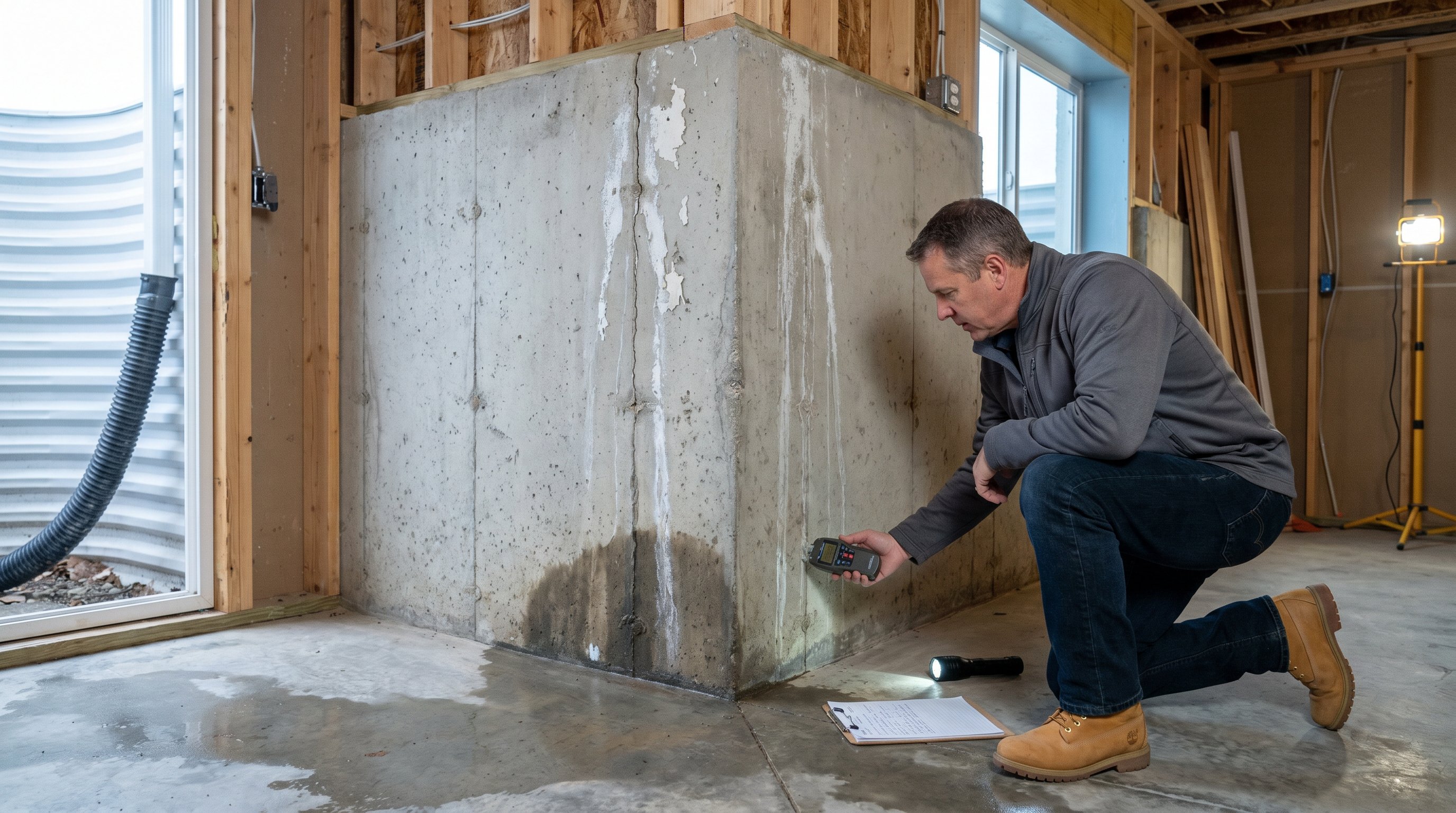
A basement leak usually starts small: a hairline crack, a damp corner, that faint mineral line creeping up the wall after a spring storm. Then one wet season later, the smell changes, the paint bubbles, and the room you planned to finish for a gym, ADU, or theater suddenly needs repair first. In Eagle Mountain, we've seen that progression up close during pre-finish inspections, and it's why we always check for moisture before framing or hanging drywall. This guide breaks down how basement waterproofing works, what causes cracks, and when a quick fix isn't enough.
Why Basements In Eagle Mountain Are Prone To Cracks And Water Intrusion
The short answer: soil movement, drainage pressure, and freeze-thaw cycles make Eagle Mountain basement waterproofing more important than many homeowners expect.
We've opened up plenty of Utah basements where the visible problem was a 1/16-inch wall crack, but the real issue was outside: water pooling near the foundation, expansive clay-heavy soils, or downspouts dumping too close to the house. Along the Wasatch Front, settling isn't rare. The Utah Geological Survey and local geotechnical reports consistently note that soil conditions vary sharply by neighborhood, which matters because shifting soil puts lateral pressure on foundation walls.
In Eagle Mountain, newer growth areas can also mean aggressive grading changes around homes. If the lot doesn't slope away at least 6 inches over the first 10 feet, water tends to sit where you don't want it. The International Residential Code uses that standard for drainage, and in real life it's one of the first things we check before recommending basement finishing. Around neighborhoods near Ranches and along wider wind-exposed lots, we often see sprinkler overspray and poor gutter discharge making a manageable crack much worse.
Common Warning Signs Your Basement Needs Waterproofing
The biggest surprise for most homeowners is this: the basement can be leaking long before you ever see standing water.
The common warning signs are usually subtle at first:
- White chalky residue called efflorescence on concrete walls
- Musty odor that lingers even after cleaning
- Peeling paint or bubbling wall coatings
- Dark damp patches after rain or snowmelt
- Hairline cracks growing longer or wider
- Rust on metal framing, fasteners, or appliance bases
We've tested basements that looked "pretty dry" until we ran a moisture meter along the bottom 24 inches of the wall and found readings 8% to 14% higher in one corner. That's enough to affect insulation, flooring, and drywall plans. The EPA warns that moisture control is the key step in preventing mold growth indoors.
If you're planning a mother-in-law apartment, home gym, or a golf simulator room, these early signs matter even more. Waterproofing first is almost always cheaper than tearing out LVP, drywall, or custom cabinetry later.
How To Identify The Source Of Basement Cracks And Leaks
Here's the crucial fact: the crack you can see isn't always the place water is entering.
When we inspect a basement, we start by mapping the symptom pattern. Is the moisture at a wall-floor joint? Mid-wall? Around a window? After only heavy storms, or every time irrigation runs? Those details narrow the cause fast.
A practical inspection usually includes:
- Measuring crack width and direction
- Checking exterior grading and gutter discharge
- Looking for stains below hose bibs and window wells
- Testing moisture levels at multiple wall heights
- Watching whether leaks appear after rain, snowmelt, or sprinkler cycles
Vertical cracks often come from normal shrinkage or settling. Horizontal cracks are more serious because they may signal pressure from soil outside. The American Society of Home Inspectors notes that stair-step and horizontal foundation cracks deserve closer evaluation.
We've seen one especially common Utah scenario: water appears in a basement storage room, but the actual source is a clogged window well on the opposite side of the wall. That's why diagnosis comes before sealant. Otherwise, you're treating the symptom, not the system.
Sealing Foundation Cracks: Best Repair Methods For Lasting Results
Not all crack repairs work the same, and the wrong material can fail in one season.
For non-structural concrete cracks, the two most common professional options are epoxy injection and polyurethane injection. Epoxy bonds the concrete and is often used when structural continuity matters. Polyurethane expands and flexes a bit more, which makes it useful for active water leaks. In our field experience, polyurethane is often the better choice when the crack is still moving slightly or has visible seepage during wet weather.
Surface patching alone usually doesn't last. A thin smear of hydraulic cement or caulk may hide the problem, but if hydrostatic pressure keeps building, the leak often returns a few months later. The Concrete Foundation Association and manufacturer guidance from brands like Sika and Simpson Strong-Tie both emphasize matching the repair method to the crack type.
For lasting results, we also look at the bigger plan. If a homeowner wants to finish the basement later, we'd rather repair the crack properly now than risk damage to framing, insulation, or a future sauna bathroom, theater wall, or ADU kitchenette.
Interior And Exterior Waterproofing Solutions That Help Prevent Future Leaks
The real breakthrough usually comes when homeowners realize sealing a crack is only one part of basement waterproofing.
Interior solutions manage water that has already reached the foundation. These can include drainage channels, sump systems, vapor barriers, and dehumidification. Exterior solutions try to stop the water before it gets in: grading corrections, extended downspouts, membrane waterproofing, footing drains, and better window well covers.
Which approach works best depends on the cause. If the issue is minor seepage from one shrinkage crack, injection repair may be enough. If water pressure is building along multiple walls, a more complete drainage strategy is smarter. The Federal Emergency Management Agency and EPA both stress controlling site drainage and moisture at the source.
In practice, we often recommend combining methods. For example, in Eagle Mountain and nearby Saratoga Springs, we've seen homes improve dramatically after three simple fixes: extend downspouts 10 feet away, regrade one side yard, and install a covered window well. Those upgrades cost far less than rebuilding a finished basement after a leak.
When To Call A Professional For Basement Waterproofing Repairs
If the crack is widening, the wall is bowing, or water keeps returning after DIY fixes, it's time to call a pro.
Some issues are simply too risky to guess at. We recommend professional evaluation when:
- A crack is wider than 1/8 inch
- The wall shows horizontal movement or bowing
- Water enters repeatedly after storms
- You see mold, rot, or damaged insulation
- The basement is being prepared for finishing, bedrooms, or an ADU
This matters because waterproofing and remodeling are connected. Before we hang drywall or build egress-window bedrooms, we inspect for foundation movement and moisture first. Utah code requirements around bedroom egress, electrical, and plumbing don't mean much if the wall behind the finished space is wet. And once a basement is closed in, diagnosing leaks gets more expensive.
At Panden, we handle free in-home estimates, transparent planning, and permit coordination when a project moves from repair into full basement remodeling. For many homeowners, especially near fast-growing Eagle Mountain corridors, that early inspection prevents thousands in rework and keeps the 8-to-14-week construction timeline on track.
Conclusion
Basement leaks rarely stay small. In most cases, the smartest move is to identify the source early, repair the crack correctly, and fix the drainage conditions that caused it. If you're thinking about finishing a basement in Eagle Mountain, waterproofing should come first. It protects the investment, the air quality, and the long-term value of the space you're building.