
Custom Home Water Rights In Cedar Valley Acreage, UT: What To Know Before You Build In 2026
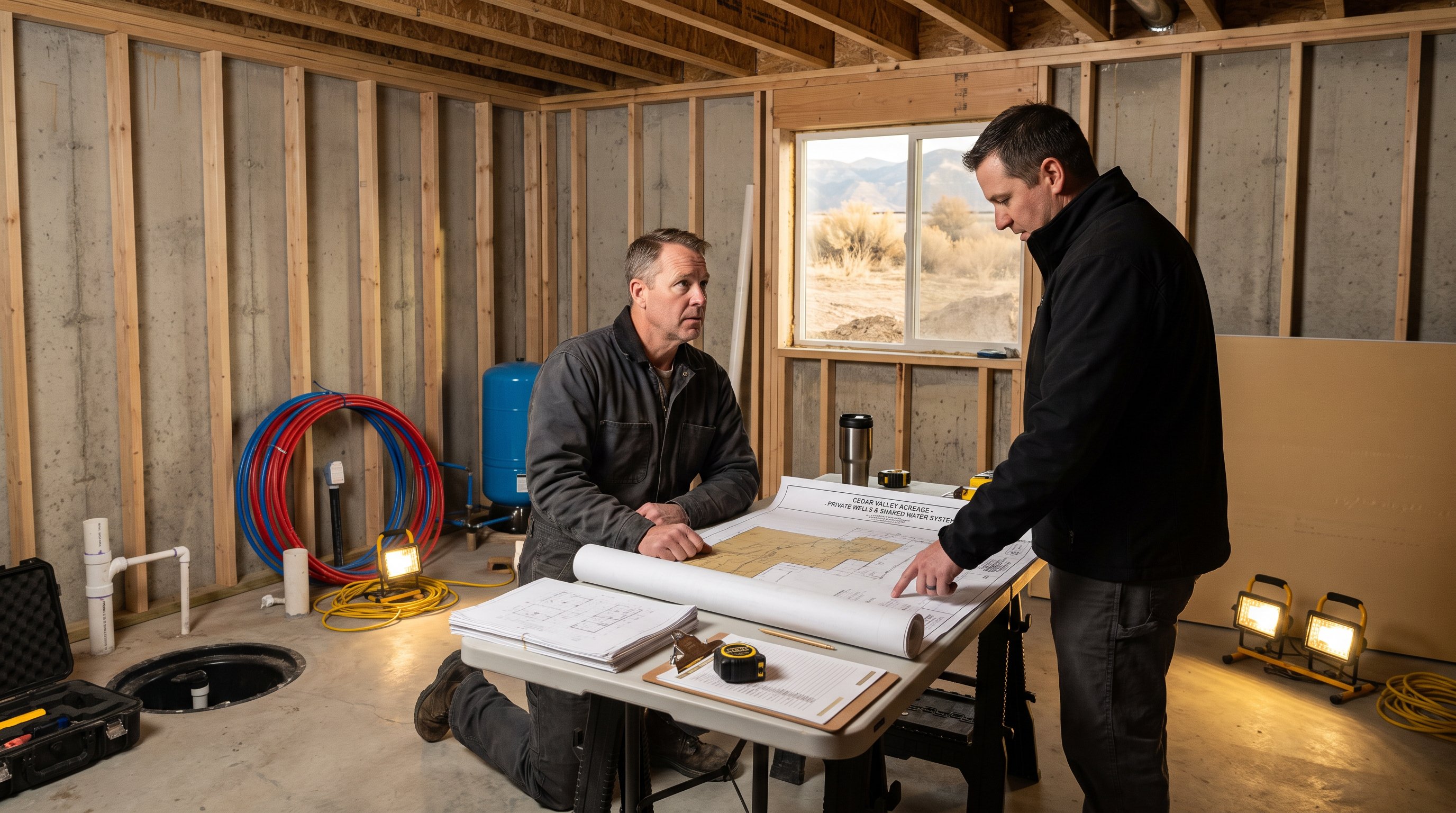
Water can make or break a rural build long before concrete shows up on site. We've sat at kitchen tables with Utah homeowners who found a beautiful lot near Cedar Valley Acreage, pictured the porch, the shop, maybe a future ADU, and then discovered the property's water situation was far more important than the view. If you're planning a custom home in Cedar Valley Acreage, UT, this is the part to get right first, because water rights shape what you can build, what it costs, and whether your project moves smoothly or stalls fast.
Why Water Rights Matter When Planning A Custom Home On Cedar Valley Acreage
Water rights matter because owning land in Utah does not automatically mean you own the right to use water on it. That surprises a lot of buyers.
In Cedar Valley Acreage, UT, this issue comes up early because many parcels are rural, larger than standard subdivision lots, and outside the simple city-utility setup people are used to along the Wasatch Front. A property can look build-ready on paper and still have major limits on culinary water, irrigation use, livestock watering, or well approval.
We've seen buyers focus on septic, driveway access, and views of the Oquirrh Mountains, then realize the harder question is whether the parcel has a valid water source that matches the home they want. A 3-bedroom custom home with a landscaped yard and future detached garage apartment creates a different water demand than a cabin-style build with xeriscaping.
Utah treats water as a public resource managed under state law. The Utah Division of Water Rights tracks whether a right exists, what it can be used for, and whether it can be changed, split, or transferred. If those details are off, you can face redesigns, permit delays, or extra cost before excavation even begins.
That's why we tell clients to treat water rights the way they'd treat structural engineering: verify first, dream second.
How Utah Water Rights Work For Rural Residential Properties
Utah water rights work on a priority system called prior appropriation, first in time, first in right. In plain English, a water right is a legal right to use water for a defined purpose, from a defined source, in a defined place.
For rural residential land, that usually means one of four setups: an existing individual water right, a share in a private water company, a connection to a public or community system, or a qualifying small-use exemption such as a domestic well. The details matter because "there's water nearby" is not the same as "this lot has legal water service."
The Utah Division of Water Rights maintains public records through its water rights database. That's where you can confirm the water right number, point of diversion, beneficial use, and any change applications. If the parcel seller says, "A well should be fine," we'd still verify the groundwater area status before counting on it.
And that's a big issue in western Utah County. Portions of Cedar Valley have long-standing groundwater management pressure. The Utah Division of Water Rights groundwater reports show that some basins face limits because withdrawals have exceeded natural recharge over time.
For homeowners, the practical takeaway is simple: the legal right, the physical source, and the county or utility approval all have to line up. If one piece is missing, the deal is not as clean as it looks.
Key Questions To Ask Before Buying Or Building On Acreage
The right questions upfront can save months of redesign and five-figure surprises. We ask them before we price construction, because water affects the site plan as much as the floor plan.
Start here:
- Is there an appurtenant water right attached to the parcel? If yes, get the number and verify it.
- What uses are allowed? Culinary only, irrigation, stock watering, or something narrower?
- Is the source a private well, shared system, or water company connection?
- Can the right be transferred with the sale? Not every arrangement moves automatically.
- Are there drilling restrictions or moratorium concerns in this part of Cedar Valley?
- What does the county require for proof of water before issuing permits?
We'd also ask for the well log, pump test, and any recorded shared-well agreement if one exists. A pump test matters because a legal right without reliable production can still leave you with a real construction problem. The U.S. Geological Survey notes that well yield varies sharply based on local geology, even across short distances in basin-and-range terrain like Utah's western valleys.
For buyers comparing rural options, some planning lessons from older home addition projects apply here too: hidden infrastructure usually drives the budget more than finishes do.
If the seller or agent can't answer these questions clearly, we'd slow down before moving ahead.
Water Source Options For A Custom Home Site
Most custom home sites rely on either a private well or a shared/community water setup. Neither is automatically better: the right choice depends on legal access, reliability, cost, and how you plan to use the property.
On acreage near Eagle Mountain and west of Utah Lake, we look at both the paper trail and the day-to-day reality. A system can be legal and still expensive to maintain. Another can be easier to permit but come with monthly fees, tap charges, or irrigation limits that affect the site design.
When we review a rural project, we want to know how the water choice affects trenching, pressure systems, fire flow expectations, future outbuildings, and whether the owner wants extras like a large lawn, garden beds, or an accessory dwelling unit. Those aren't side issues. They change the whole utility plan.
Private Wells Vs. Shared Water Systems
Private wells offer control, but they also put the testing, equipment, and long-term maintenance on the owner. You may need drilling, a pump, power, pressure tanks, treatment equipment, and periodic water quality testing. The CDC recommends testing private well water at least yearly for total coliform bacteria and nitrates, with more frequent testing if local conditions raise concerns.
Shared systems or private water companies usually reduce the risk of owning every mechanical part yourself. But they may limit outdoor watering, impose connection fees, or restrict additional structures. We've reviewed rural builds where the easier permit path came from a shared system, yet the lot owner had less flexibility for a future guest house.
So the decision is rarely just cost. It's about control versus predictability, and which tradeoff fits your long-term plan.
How Water Rights Can Affect Home Design, Permits, And Project Costs
Water rights affect design because they shape occupancy assumptions, fixture counts, irrigation plans, and even whether an ADU or shop apartment is realistic. If the water setup is limited, the house program often has to change.
We've had clients come in wanting a custom home plus a detached structure, extensive landscaping, and space for aging parents later on. If the parcel's water documentation only supports a narrower residential use, we may need to reduce irrigated area, rethink the ADU, or coordinate a formal change application before final design. That can add time and consultant costs well before framing starts.
Permits are tied in too. Counties and health departments typically want proof of legal water and wastewater feasibility before issuing or finalizing approvals. If a property needs a well, pump system, storage, or treatment, that utility scope should be priced early. National well installation data from HomeAdvisor often lands in the thousands before you add trenching, power, and site-specific treatment: in rural Utah, terrain and depth can push the number higher.
This is where our process matters. At Panden, we're used to solving permit and infrastructure issues before they turn into field delays. Even though much of our work is along the Wasatch Front, the same discipline applies on acreage: verify utility rights, coordinate with local reviewers, and avoid designing features the site can't legally support.
That early assignments is usually cheaper than redesigning after permit comments come back.
Conclusion
Before you build in Cedar Valley Acreage, UT, confirm the water story first: the legal right, the physical source, and the permit path. If those three pieces match, the rest of the project gets far more predictable. We'd rather spend an extra week reviewing records now than watch a custom home budget drift later, especially on rural land, where one missing water detail can change everything.
Custom Home Water Rights FAQs for Cedar Valley Acreage, UT
Why are water rights crucial when planning a custom home on Cedar Valley Acreage?
Water rights determine legal access to water, impacting what you can build, the cost, and permit approvals on rural Cedar Valley Acreage properties. Without proper water rights, your construction plans may face delays or require redesign.
How does Utah’s water rights system affect rural residential properties like those in Cedar Valley Acreage?
Utah uses a priority system called prior appropriation where water rights are legally tied to specific uses, sources, and locations. Rural properties might have individual rights, shares in private systems, or require domestic well exemptions, each with unique restrictions.
What key questions should I ask before buying acreage near Cedar Valley to ensure adequate water rights?
Ask if an appurtenant water right exists, permitted uses (culinary, irrigation, stock), source type (private well or shared), transferability with sale, drilling restrictions, and county water requirements to avoid costly issues.
What are the pros and cons of private wells versus shared water systems for a custom home site?
Private wells offer full control but require owner maintenance, testing, and equipment costs. Shared systems provide easier maintenance and permit paths but may limit outdoor watering and add fees, affecting design and long-term use.
How can water rights influence my custom home's design, permits, and overall project costs in Cedar Valley Acreage?
Water rights impact occupancy limits, fixture counts, landscaping, and accessory structures. Insufficient rights can force plan changes, increase consultant fees, delay permits, and raise utility installation costs before construction begins.
Can I build a detached accessory dwelling unit (ADU) on Cedar Valley Acreage with limited water rights?
Whether an ADU is feasible depends on your water rights documentation. If the rights support only narrow residential use, you may need to reduce irrigated space or apply for a change in water use before permits are approved.